
Last updated November 25, 2026
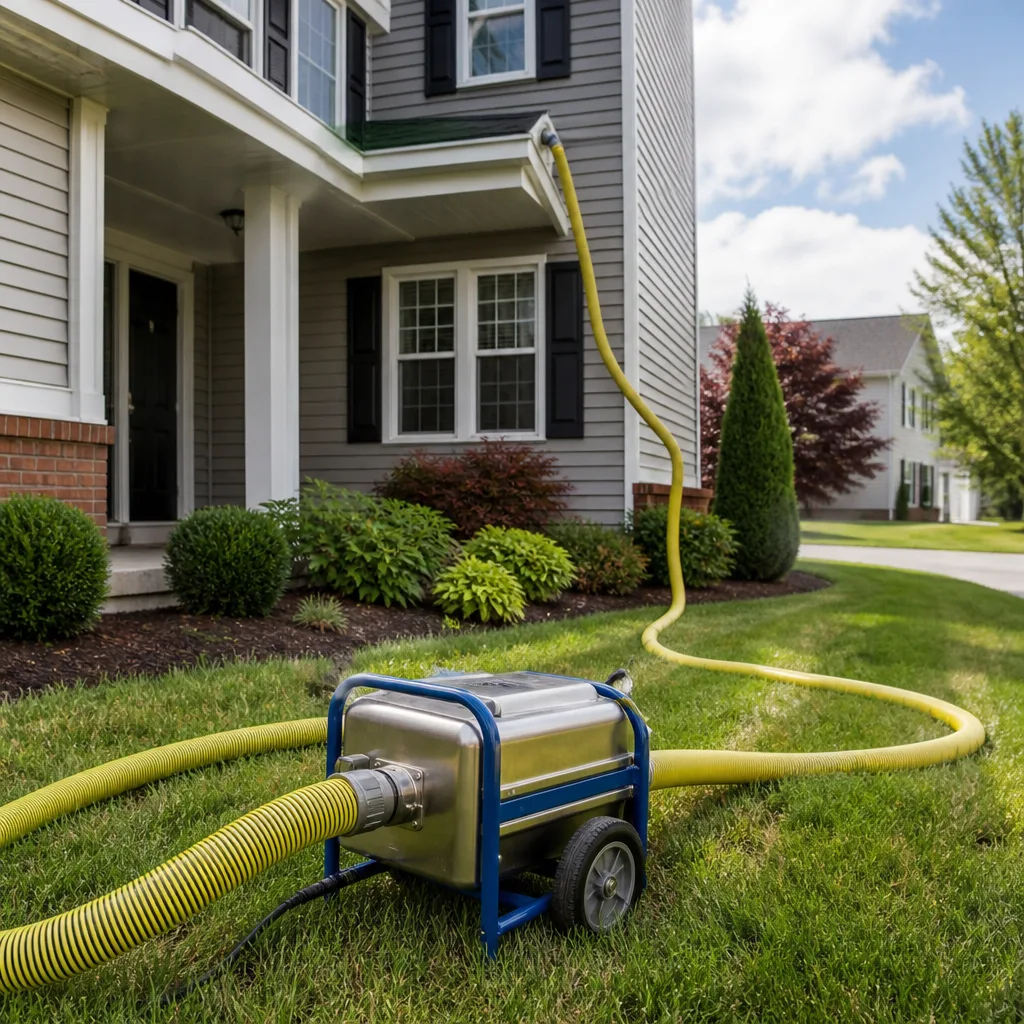 Whole-home duct cleaning
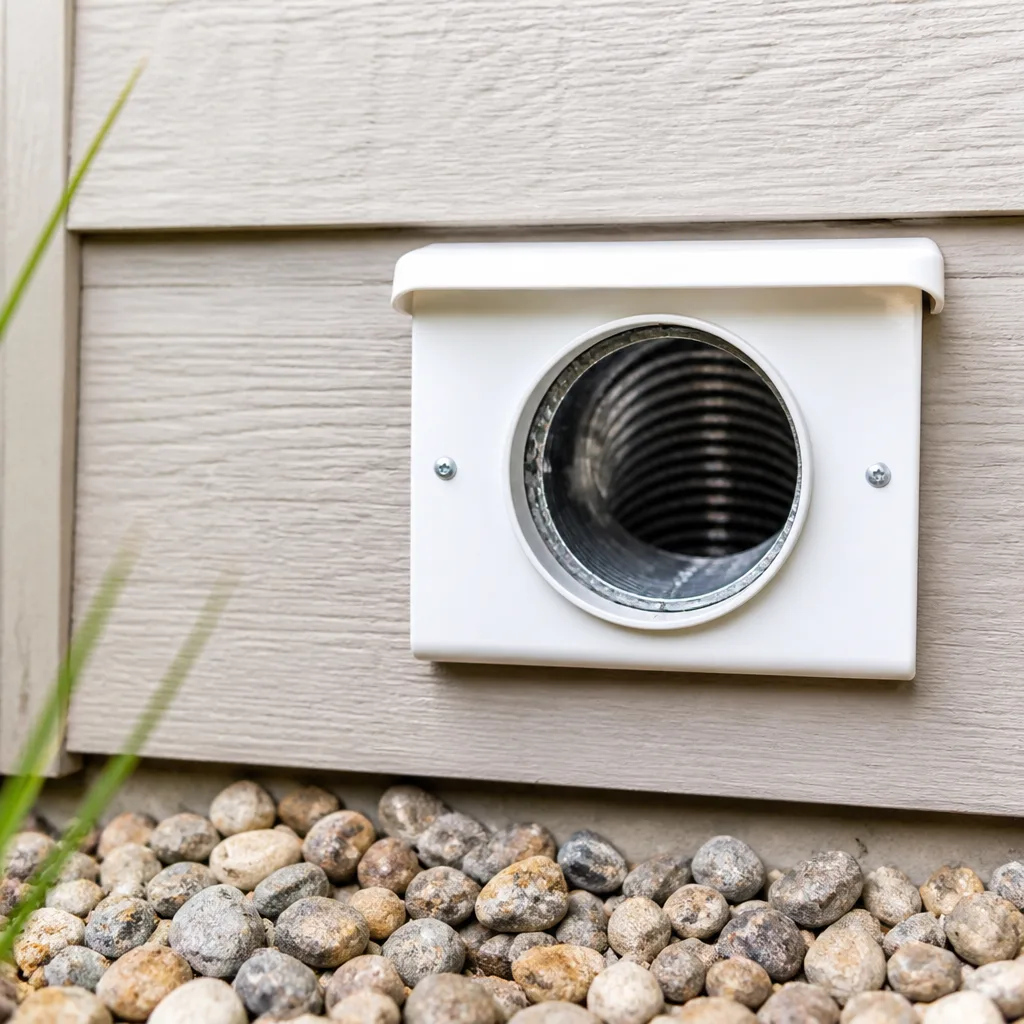 Dryer vent cleaning
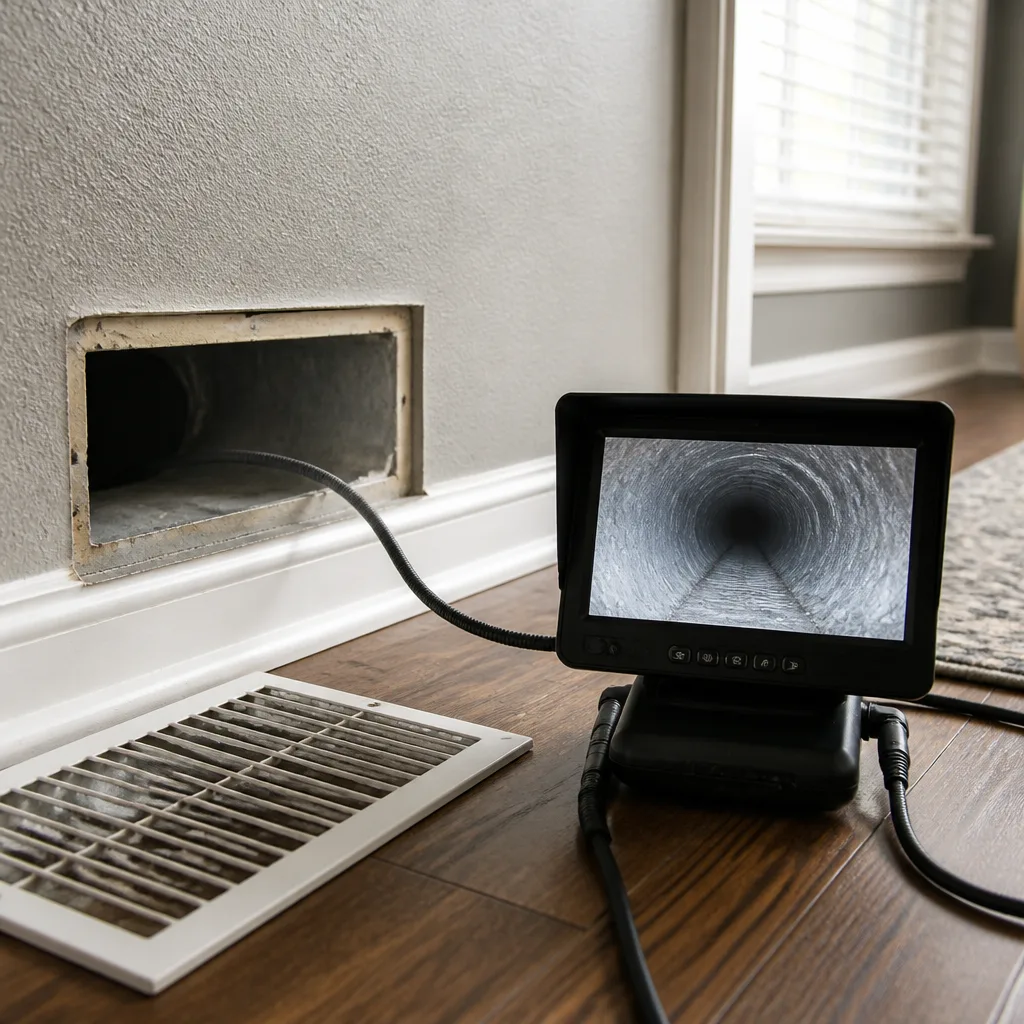 Camera inspection
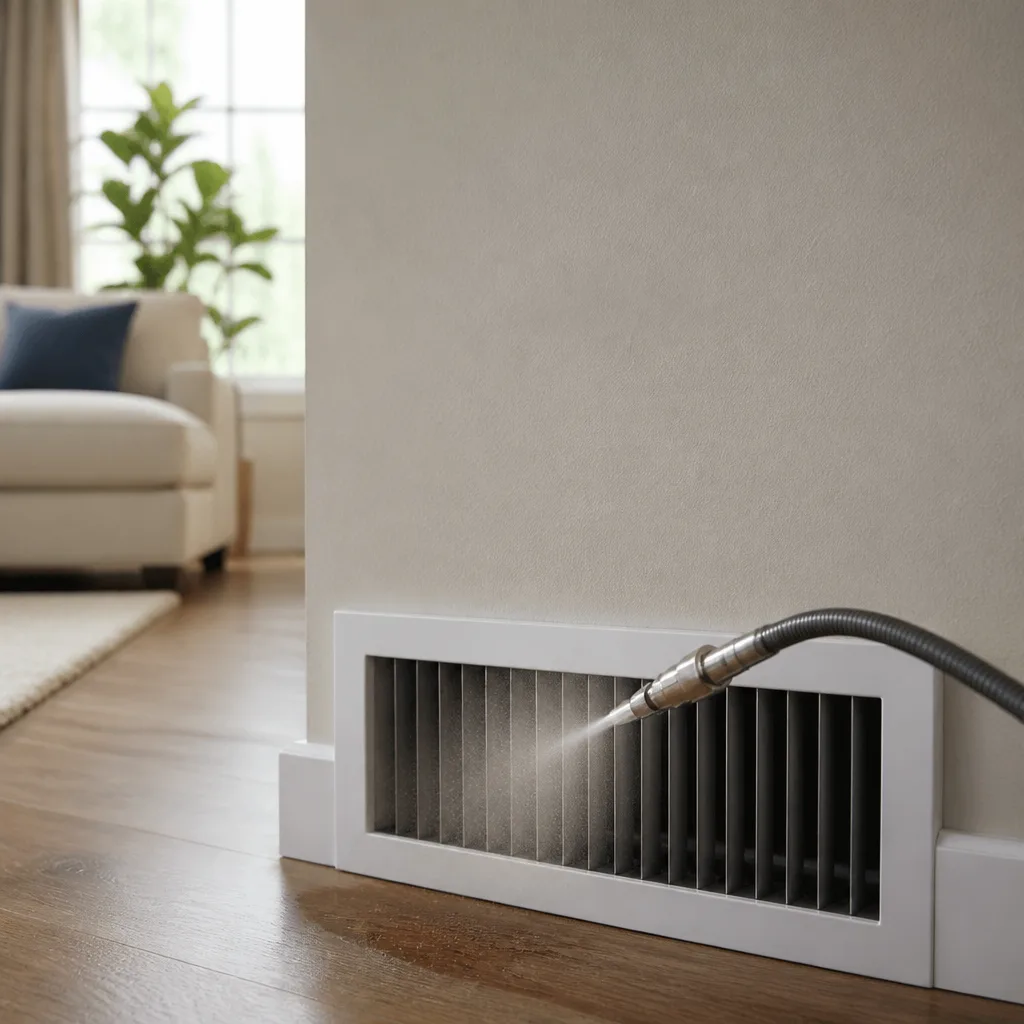 Sanitizing & deodorizing
Whole-system duct and dryer vent check with before-and-after photos - you see exactly what came out of your vents
That "$99 whole-house special" is a bait ad - the real number appears once they are in your hallway, or the "clean" is a shop-vac at the register. We photograph the inside of your ducts before and after instead.
Seasonal Air Duct Cleaning Care for Washington Park: Year-Round Homeowner’s Guide
Most Washington Park homeowners book a duct cleaning in October, right before the furnace kicks on. That timing feels logical and it’s usually wrong. By October, the heaviest particulate load of the year is already sitting in your supply runs, packed in over a summer of cottonwood fiber, rehab dust, and open-window afternoons. Spring cleaning in Washington Park isn’t just about pollen in the air. It’s the point where your ductwork takes on the most debris, and the point where a cleaning does the most work. This guide lays out how Denver’s four seasons load your system differently, when each one hits hardest, and how to build a cleaning calendar around Front Range conditions instead of generic advice.
Quick Answer
The best time to clean air ducts in Washington Park is late spring through early summer, after cottonwood and elm drop their seed and catkin load but before the AC runs hard, with a second inspection in early fall to catch humidity-related issues before heating season. Homes near active construction or major corridors may need a mid-cycle check as well. One full-system cleaning timed to that calendar, done with professional equipment, outperforms two loosely timed visits with a shop vac.
Styles & brands we work with
- Whole-home duct cleaning
- Dryer vent cleaning
- Camera inspection
- Sanitizing & deodorizing
Table of Contents
- Why Four Seasons Create Four Different Duct Problems in Washington Park
- Spring in Washington Park: Cottonwood, Elm, and the Late-Spring Filtration Event
- Summer AC Operation in Denver’s Dry Air: How Low Humidity Changes Duct Loading
- Post-Wildfire Smoke on the Front Range: When to Clean and What to Test For
- The Fall Pre-Heating Inspection: What Summer Humidity Leaves Behind
- Construction-Active Blocks vs. Established Corridors
- Building Your Washington Park Duct Care Calendar
- Common Mistakes to Avoid
- When to Call a Professional
- Frequently Asked Questions
- The Bottom Line
Why Four Seasons Create Four Different Duct Problems
Duct contamination isn’t one thing happening at a steady rate. It’s a series of loads, and in Washington Park each season deposits something different into your system. Spring delivers the heaviest particle volume. Summer changes how that material moves through the ducts and where it settles. Fall exposes whether moisture got in over the summer and stayed. Winter bakes the result into your living space every time the heat runs.
A few factors make Washington Park’s cycle distinct from a generic suburban pattern:
- Mature tree canopy. The park and the surrounding blocks carry full-grown cottonwoods and elms. They don’t just drop leaves. They release seed fiber and fine catkins that behave like a filtration test no standard filter is designed to pass.
- Dense, older housing stock. Many Washington Park homes were built long before ductwork was designed with modern filtration in mind. Return paths are often undersized, and any leakage pulls unfiltered air straight into the system.
- Construction churn. Rehabs, scrapes, and rebuilds happen on a rolling basis around the neighborhood. Drywall dust and silica fines travel a long way and settle where you’d least expect.
- Front Range weather swings. Denver’s shoulder seasons bring temperature and pressure changes that push outdoor air into and out of the envelope, which is exactly how fine debris finds its way into ducts.
We’ve watched this pattern repeat across Washington Park homes for years. When we inspect a system in early summer, the supply branches typically carry the season’s accumulation. By winter, the same debris is being heated and recirculated while the house is closed up. The calendar you build matters more than the number of cleanings you book.
If you’d like a baseline inspection before deciding on a schedule, our service in Washington Park starts with a camera inspection of the trunk and supply runs so you can see what we see.
Spring: Cottonwood, Elm, and the Late-Spring Filtration Event
Late spring in Washington Park is the single heaviest particulate event of the year. When the cottonwoods and elms release seed fiber and catkins, the outdoor air carries a fine, sticky load that a standard 1-inch filter simply can’t absorb. The filter loads fast, the blower pulls past it, and the unfiltered remainder lands in the return plenum and supply trunks.
What a spring loading event does to your system, in order:
- The return-side filter face-loads within days of a major cottonwood drop.
- Pressure across the filter rises, and the blower sees resistance.
- Air takes the path of least resistance through any gap in the return ductwork, pulling attic and crawlspace air into the system.
- Fine fiber and seed material deposits on the inside of the supply trunk, usually where the velocity drops near individual registers.
- Once deposited, the material stays put unless mechanically removed.
This is the event most homeowners miss because they think of cleaning as a fall chore. It isn’t in Washington Park. The right move is a professional-grade cleaning in late spring or early summer, after the catkin drop has finished but before the AC runs continuously. Removing the load before summer keeps it from being repeatedly pushed through the supply runs every cooling cycle.
Equipment matters here. Consumer-grade vacuums agitate a duct but can’t pull the fine fiber out cleanly. That’s why we use Rotobrush contact-vacuum equipment on the supply and return branches and follow with Nikro HEPA extraction on the trunk, which is the practical difference between a duct that smells clean and one that is clean.
Summer AC Operation in Denver’s Dry Air: How Low Humidity Changes Duct Loading
Denver’s low summer humidity is genuinely useful for a house. It’s also a different contamination physics than heating season. Here’s the short version: in dry air, fine particles stay suspended longer and travel farther before settling. In winter, cold air in a duct becomes denser and the same particles fall out of the airstream much more readily.
That means summer loading behavior is different from what most generic duct cleaning advice assumes:
- Fine particles stay airborne. Dry, warm air holds a lighter particle load longer, so fine material distributes through the whole duct run rather than collecting near one register.
- The AC coil dries it out. Moisture that collects on the evaporator coil in humid climates stays; in Denver, the coil and drain pan dry quickly, so microbial growth is less common than you’d see in a humid region. But dry material passes straight through.
- Return-side filtration does more work. With the AC running, the return pulls a continuous stream through the duct. Any filter bypass becomes a summer problem, not a winter one.
- Dust tracks toward the return. The pressure gradient in a closed-up summer house draws air, and everything riding in it, toward return grilles rather than supply registers.
In our experience, a system cleaned in early summer in Washington Park behaves noticeably better through July and August. You get lower static pressure, better airflow at the registers, and a filter that loads at a reasonable rate instead of a fast one. If your AC is short-cycling or rooms on the far side of the house aren’t cooling evenly, the duct itself is usually part of the answer, and it’s worth having the system inspected before the middle of summer.
For a closer look at the whole system, our air duct cleaning goes beyond the register-and-trunk routine by covering the return plenum and blower-side ductwork in the same service.
Post-Wildfire Smoke on the Front Range: When to Clean and What to Test For
Smoke events on the Front Range are now a fact of summer and early fall in Washington Park. When smoke sits over the neighborhood for days, fine particulate falls out of the air and lands on every surface, including the inside of your ducts. A standard cleaning alone is insufficient after a smoke event, because the deposit isn’t just physical dust. It’s an odor load that bound to the material already in the duct, plus fine particulate that settled into every low-velocity section.
What a proper post-smoke protocol includes:
- Full-system cleaning first. The mechanical removal of the deposited material is the foundation. Without it, any sanitizing step is treating the surface on top of the particulate.
- Inspection of the coil and drain pan. Smoke particles get caught on the wet evaporator coil and can hold odor there. The coil is part of the system, not separate from it.
- Air scrubber treatment. That’s where Abatement Technologies scrubbers come in. They run during the sanitizing phase to pull fine particulate out of the work area and reduce the airborne load while we’re working.
- Sanitizing, not just deodorizing. A reactive spray that masks smell isn’t the same as a treatment that addresses microbial contaminants. The air quality service is a distinct step, and it’s the one most basic duct cleaners skip.
- Filter upgrade. Post-smoke is the natural moment to consider a filtration upgrade. We work with Honeywell and Aprilaire product lines because they integrate into the existing system rather than sitting on the floor of a bedroom.
Timing matters too. Clean after a smoke event has cleared and before heating season starts, so the material doesn’t get heated and recirculated through the winter. If you’re cleaning in late summer anyway as part of your seasonal calendar, a smoke event is a natural trigger to move the cleaning earlier.
The Fall Pre-Heating Inspection: What Summer Leaves Behind
Fall in Washington Park is an inspection season, not necessarily a cleaning season. The point of a fall system check is to catch what summer left behind before the furnace runs for months. Most years, that’s a humidity-related issue, not a sediment one.
What we check in a fall inspection:
- Condensate handling. If the AC drain pan or line clogged and overflowed during the summer, the resulting moisture can sit in the duct insulation or plenum. It dries slowly, and the smell becomes obvious the first week the heat runs.
- Coil condition. A coil that collected fine summer dust is now covered in a film that will bake on with the first heating cycle. Clean it before that happens.
- Duct seal integrity. Summer pressure swings can find weak joints. Sealing those before heating season prevents the classic “cold room on the north side of the house” issue.
- Return bypass. If return-side gaps are pulling attic or crawlspace air into the system, the heating season turns that into a winter energy penalty.
The fall check is also the right time to address duct sealing. Cleaning removes the debris; sealing the leakage prevents the next round from accumulating in the same spots. That’s a full-system approach and it’s the practical difference between a cleaning that lasts a season and one that lasts a year.
For homeowners who want the whole pathway addressed at once, our HVAC cleaning covers the coil, blower, and associated ductwork during the same visit, which avoids coordinating multiple contractors for one system.
Construction-Active Blocks vs. Established Corridors
Not all Washington Park blocks load the same. If you’re on a block with an active scrape or rehab, or near an arterial that sees regular traffic, your cleaning calendar should be tighter than standard advice. The difference isn’t subtle: construction dust behaves differently from organic debris because it’s heavier, finer, and more abrasive to the blower.
How to think about the difference:
- Construction-active blocks see drywall dust, silica fines, and wood dust during demolition and framing. These deposit in the return air path first, because return-side ductwork almost always has gaps that pull unconditioned air in. In our experience, homes on a rehab block benefit from an inspection every season during the build, even when a full cleaning isn’t yet warranted.
- Established residential corridors load on the seasonal cycle – heavy in spring, moderate in summer, light in fall. The standard annual spring cleaning with a fall inspection is the right cadence.
- Corner lots near the park take the heaviest spring hit because they’re within reach of mature cottonwoods on two sides.
The practical outcome is that “clean twice a year” advice is too general for Washington Park. A home on a quiet block a few streets off the park runs a modest annual cycle; a home adjacent to an active rehab needs a check in the middle of it, and possibly a second cleaning after the drywall finishes. If you’ve had recent interior work, mention it when you book, so the inspection focuses on the return side.
Building Your Washington Park Duct Care Calendar
Here’s the calendar we’d suggest for most Washington Park homes. Adjust the first item up or down depending on your block.
- Late spring (May-June): full-system cleaning. After the cottonwood and elm drop has finished but before the AC runs steadily. This is the highest-yield visit of the year.
- Mid-summer (July-August): filter check and airflow observation. Not a full cleaning; just confirm the filter is loading at a normal rate and registers are delivering expected airflow. Address duct sealing if rooms are uneven.
- Early fall (September-October): pre-heating inspection. Check condensate, coil condition, and duct seal integrity before the furnace runs continuously.
- Late fall or early winter: sanitizing if needed. If musty odors appeared during the summer or a smoke event occurred, this is the window for air quality sanitizing.
- Winter: nothing required, unless symptoms appear. If the heat is running and the house smells musty or allergies flare indoors, don’t wait for spring – an inspection is warranted.
Homeowners on construction-active blocks should add one mid-build inspection during the framing and drywall phases, and a second cleaning after final paint. On quiet established blocks, the calendar above is sufficient.
If you’re also due for a dryer vent cleaning, fold it into the same visit. It’s a lint path that loads at a different rate than your ductwork but benefits from being addressed on the same calendar.
See the difference
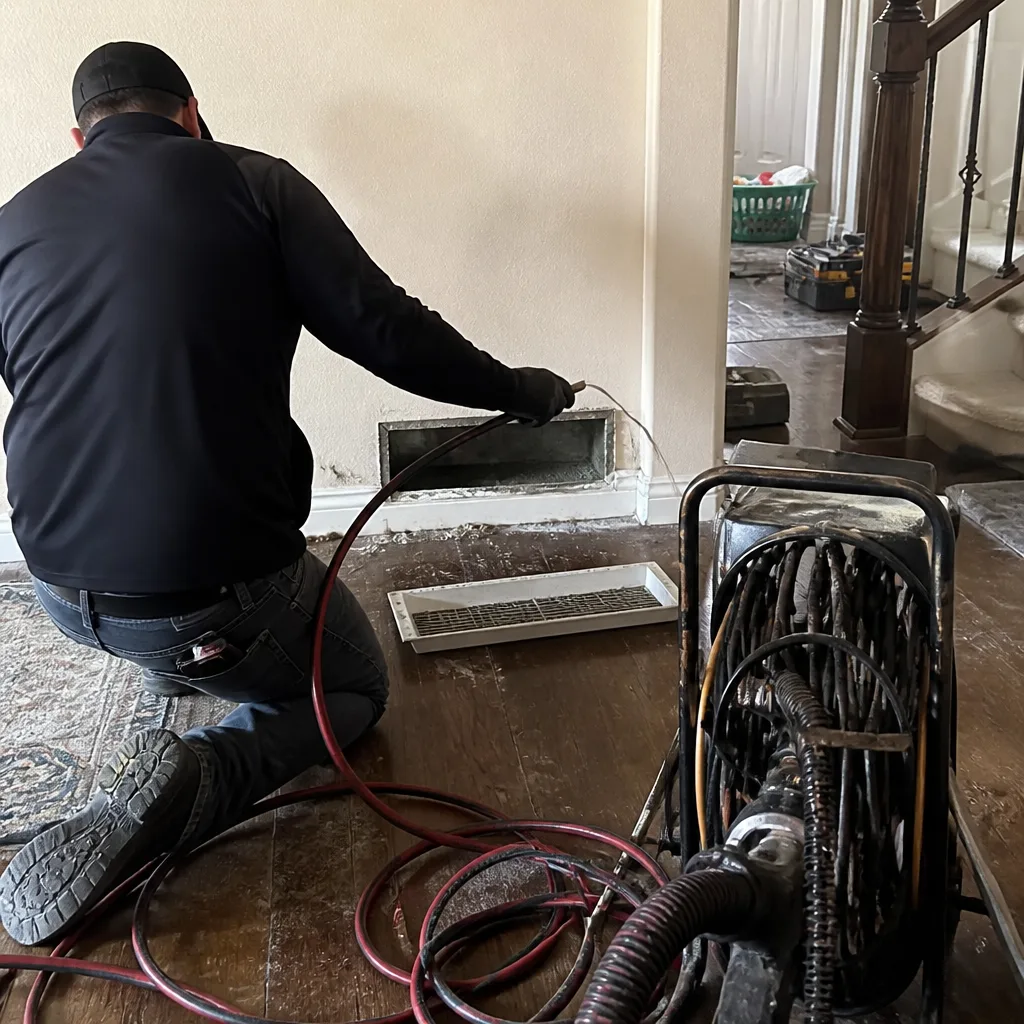 Before
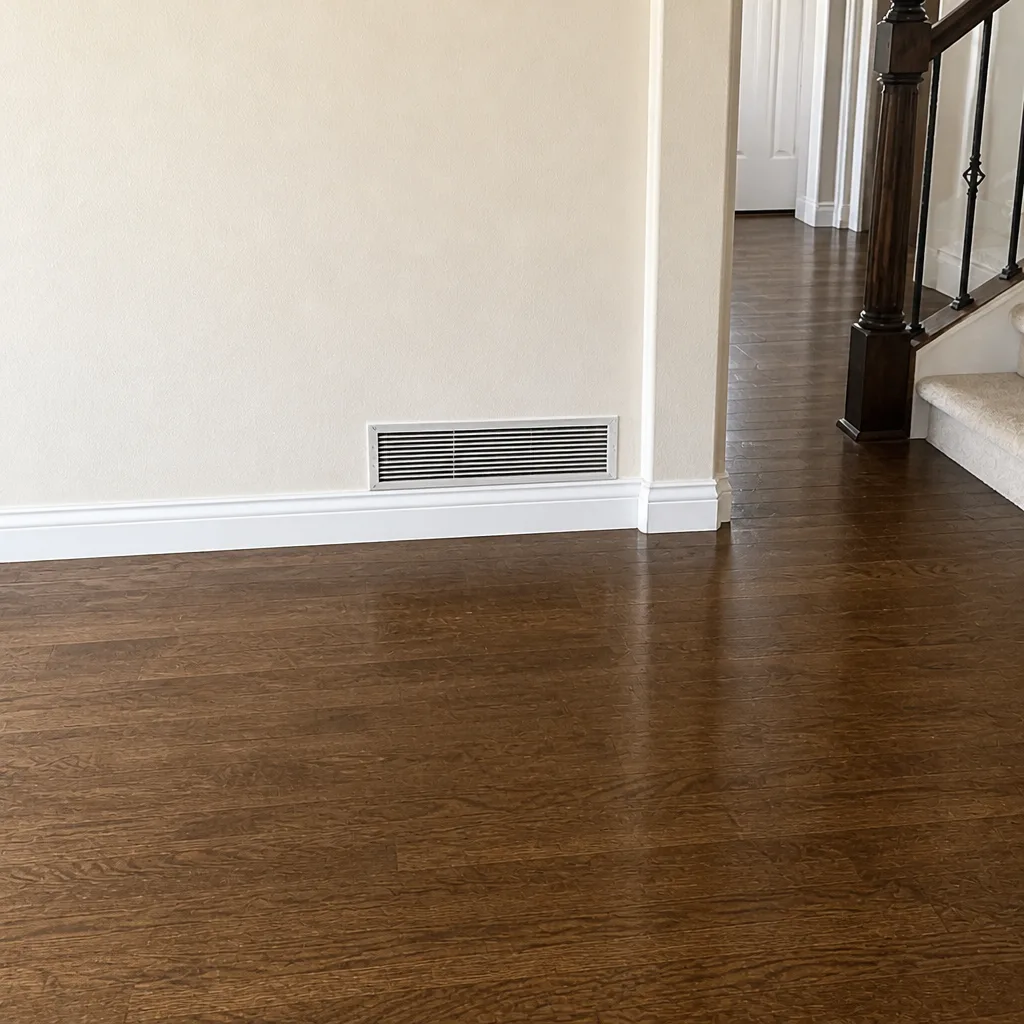 After
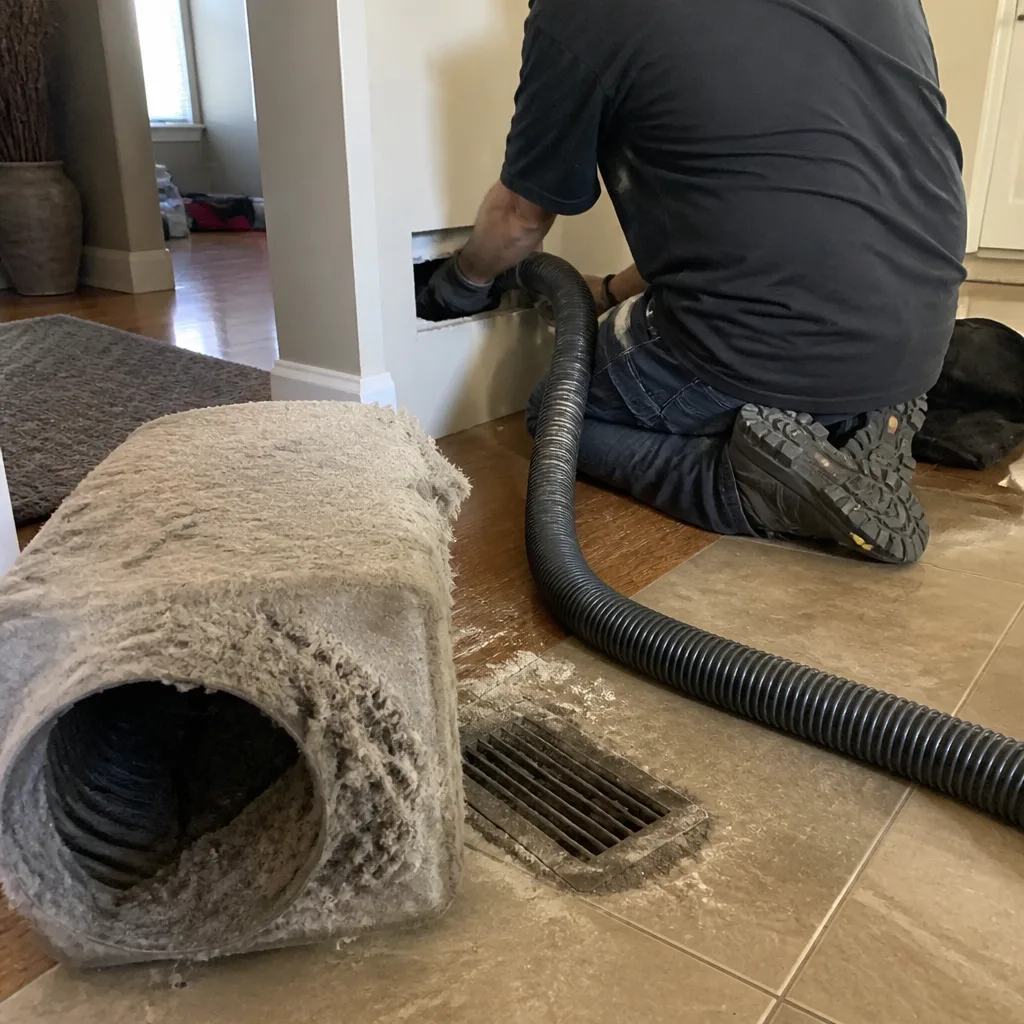 Before
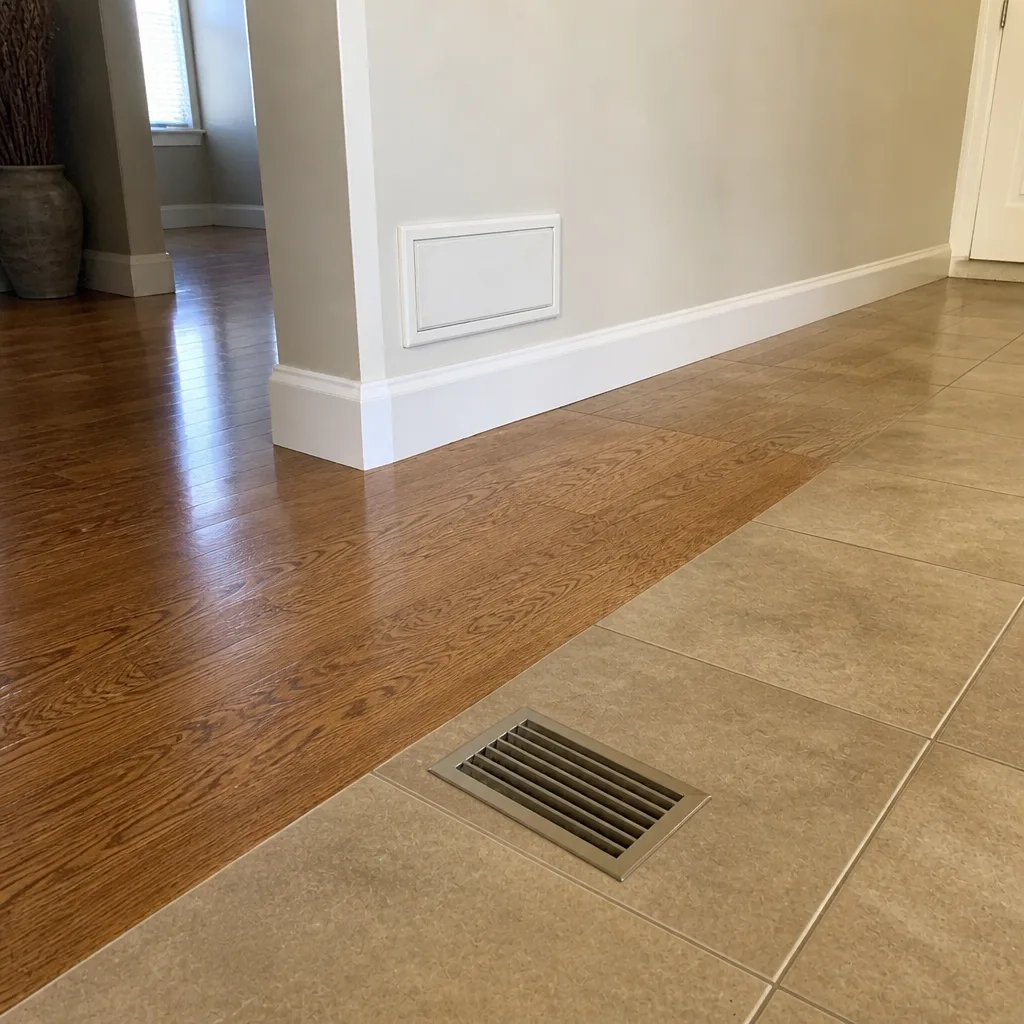 After
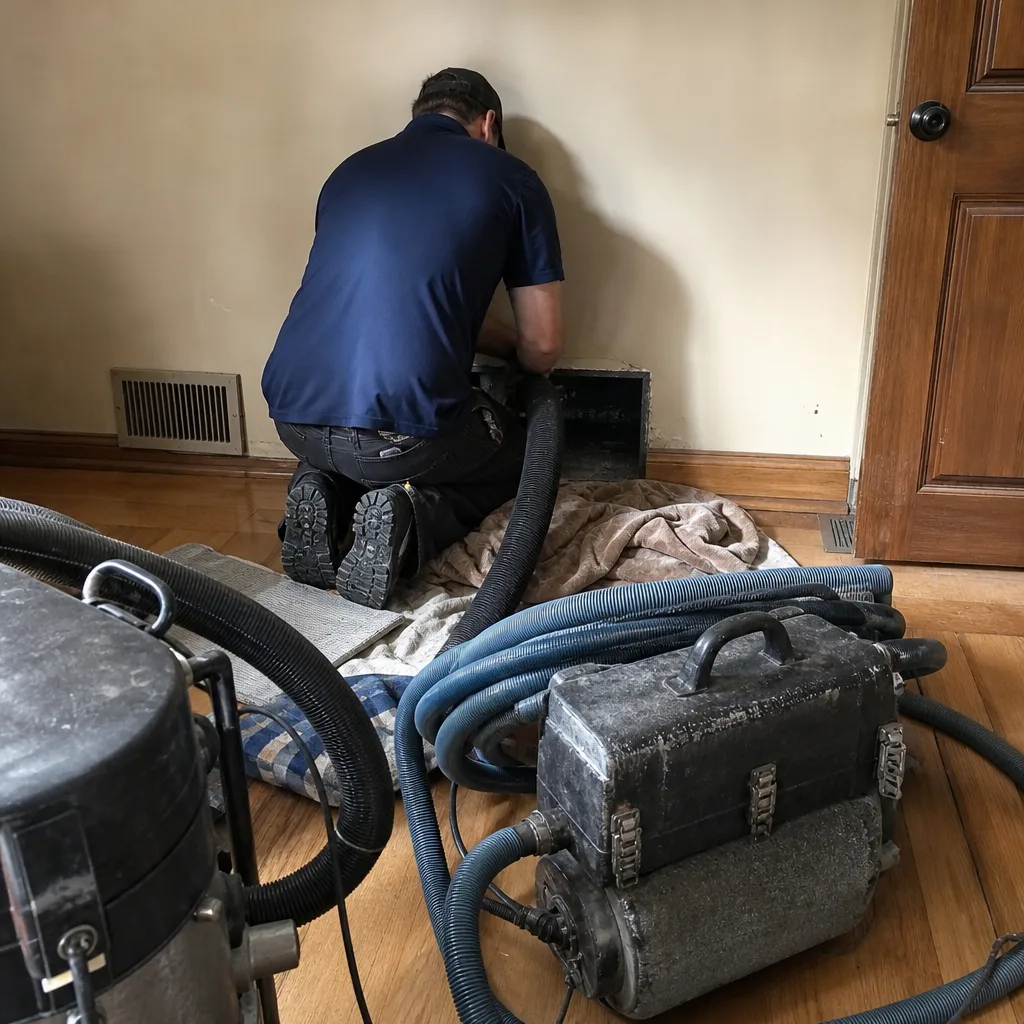 Before
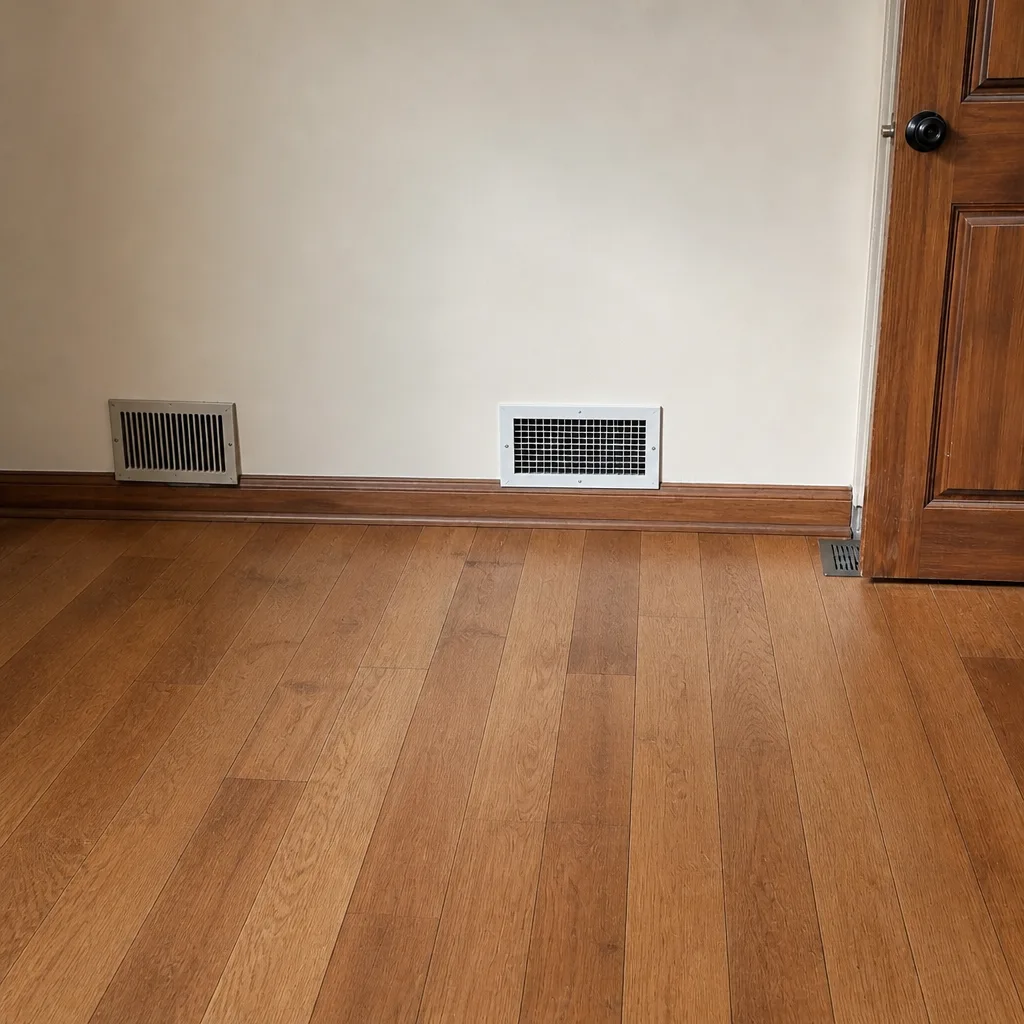 After
What Each Season Loads – At a Glance
- Spring: Cottonwood seed fiber, elm catkins, pollen, and post-winter debris. Highest particle volume of the year. Return-side filter hits capacity fast.
- Summer: Fine suspended particulate distributed through the supply run, construction dust if your block is active, smoke particulate after wildfire events. Loads the coil alongside the duct.
- Fall: Sediment load is light, but humidity-related issues from summer show up now. Sealing and coil cleaning have the biggest impact.
- Winter: Debris from spring and summer gets heated and recirculated. Filters load at a slower rate but the recirculation is continuous. Musty odors from any summer moisture become obvious.
How Often Should Washington Park Ducts Actually Be Cleaned?
For most homes on an established Washington Park block, one full-system cleaning a year, scheduled in late spring, with a fall inspection, is the right cadence. Homes near an active construction site or on a corridor with heavy traffic should add an inspection during the build. Homes with pets or recent interior work should plan on the same spring cleaning plus an additional check if symptoms appear mid-year.
The “clean twice a year” advice you’ll find elsewhere is a rough compromise. It exists because cleaning companies don’t know your block, your tree canopy, or your system’s leakage. Once you know those three variables, the calendar becomes straightforward and you stop paying for a full cleaning when a check or a coil cleaning would do.
Common Mistakes to Avoid
- Cleaning in fall only. Fall is inspection season, not the highest-yield cleaning season. By fall, the spring load is already in the duct and about to get heated. Shifting the cleaning to late spring makes a measurable difference.
- Assuming a filter upgrade solves a cottonwood event. A better filter catches more, but it also face-loads faster when the fiber volume spikes. The filter isn’t a substitute for cleaning the duct.
- Skipping the sanitizing step after smoke. A mechanical cleaning alone may not address the odor bound to material inside the duct. Sanitizing with an air scrubber in place is a separate step for a reason.
- Not sealing leaks alongside the cleaning. Cleaning removes the debris; sealing the leakage prevents the next round from accumulating in the same spots. A cleaning without the seal check may look good for a season and then backtrack.
- Hiring a shop-vac service for a seasonal cleaning. Contact-vacuum and HEPA extraction equipment exist because consumer equipment can’t pull fine material out cleanly. Rotobrush and Nikro systems do work that a machine from a home improvement store can’t match.
- Ignoring construction dust during a rehab. If your block has a scrape in progress, waiting for the year’s spring cleaning means debris from the build is already in the return path. Book an inspection early.
- Comparing only on price. A quote that’s a fraction of another usually skips the full system – return plenum, coil, blower – or uses lighter equipment. Ask what equipment is used before signing off on a price.
When to Call a Professional
Some seasonal work is fine to schedule without an urgent reason. Other situations call for a professional inspection right away. Call a professional when: musty odors appear in more than one room during heating or cooling; visible dust is discharging from a register even after a filter change; you’ve had recent interior work with drywall or a major rehab on your block; you’ve had a wildfire smoke event over the neighborhood during the summer; your AC short-cycles and far-side rooms aren’t cooling evenly; or the last cleaning you had was more than a year ago and you don’t know what equipment was used. Air Duct Cleaning Washington Park offers free estimates in Washington Park – call (866) 947-8103. We answer 24/7. Fast dispatch from 7am to 7pm, Sunday through Friday. The estimate is written, the price is set per job, and you see the before-and-after photos of your own system.
Frequently Asked Questions
Air duct cleaning in Washington Park is priced per system, not per vent, based on the size of the home, the number of branches, and whether sealing or sanitizing is included. The written estimate sets the final price, and you see the before-and-after photos of your own system so you know exactly what was done. Call (866) 947-8103 – estimates are free.
Schedule it in late spring, after the cottonwood and elm drop finishes and before the AC runs steadily. That captures the heaviest particulate event of the year before it’s recirculated through the summer. Add a fall inspection to catch any humidity-related issues before heating season.
Cheap quotes usually reflect lighter equipment, a partial-system scope, or a coupon-style starting price that grows once the technician is on site. Ask what equipment will be used, whether the return plenum and blower side are included, and whether sealing and sanitizing are part of the price. Our equipment is Rotobrush, Nikro, and Abatement Technologies, and the price is one flat rate per system agreed before work starts.
Ask for before-and-after photos of your own ducts, not stock images from a brochure. Any full-system cleaning should also include a camera inspection of the trunk and supply runs, so you can see exactly what we see. If a company can’t show you your own ductwork, that’s your answer.
Yes. After a smoke event, the routine cleaning is followed by an air scrubber treatment during the sanitizing phase, and the coil and drain pan need a direct inspection. Smoke particulate binds to material inside the duct and holds odor there, so mechanical cleaning alone isn’t enough. Call (866) 947-8103 if you’re unsure which service you need.
Yes. We cover air ducts, dryer vents, HVAC components, duct sealing, and air sanitizing in a single visit, which avoids coordinating multiple contractors for one system. Call (866) 947-8103 to set up a combined estimate for your Washington Park home.
The Bottom Line
Washington Park’s four seasons load ductwork differently, and the single highest-yield move is to shift the annual cleaning to late spring, after the cottonwood and elm drop but before summer AC. Fall is the inspection window for humidity issues; summer is the moment to address smoke events and construction dust; winter is when the previous season’s load gets baked into your living space. Pairing professional-grade cleaning with duct sealing keeps the calendar from resetting every year. Air Duct Cleaning Washington Park offers free estimates in Washington Park – call (866) 947-8103. We answer 24/7. Fast dispatch from 7am to 7pm, Sunday through Friday. Our technicians have up to 9 years of experience, and every job is documented with before-and-after photos of your own system.
Written by the team at Air Duct Cleaning Washington Park.