
Last updated November 25, 2026
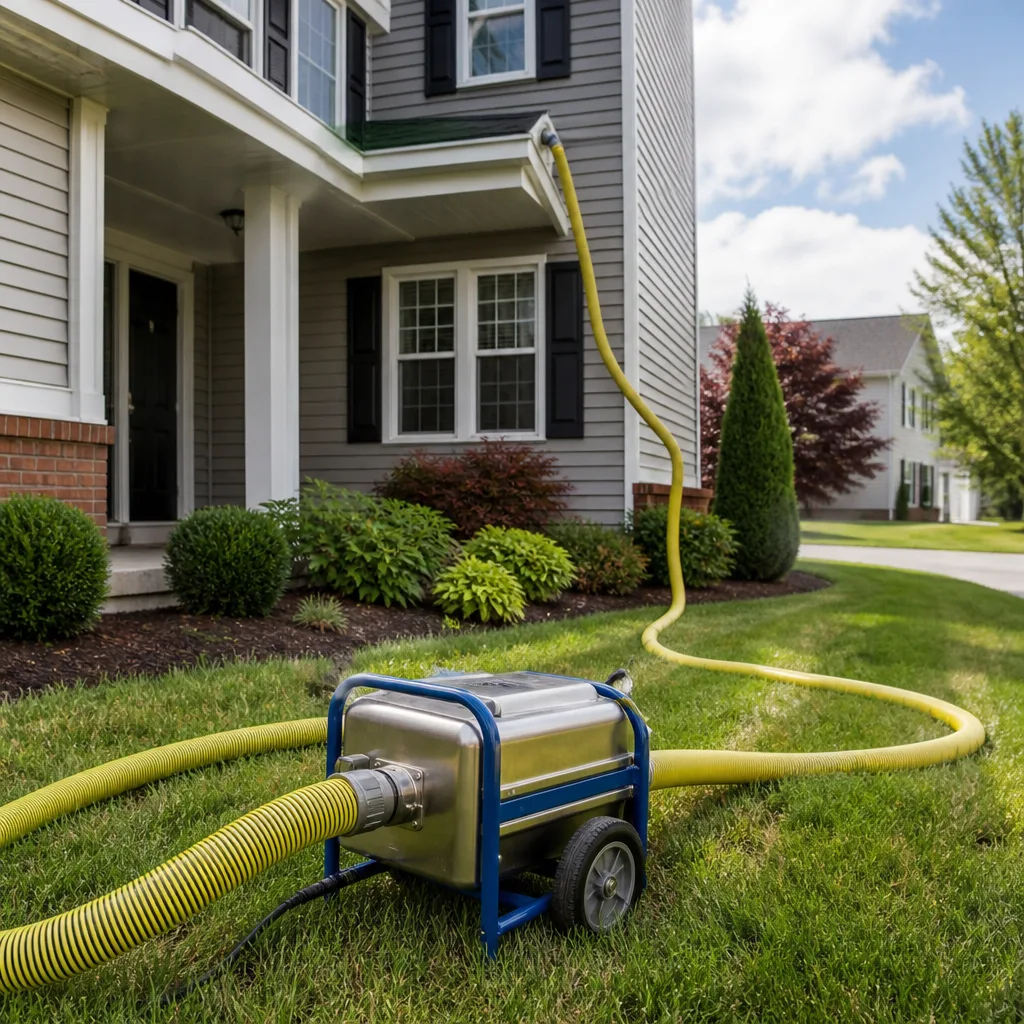 Whole-home duct cleaning
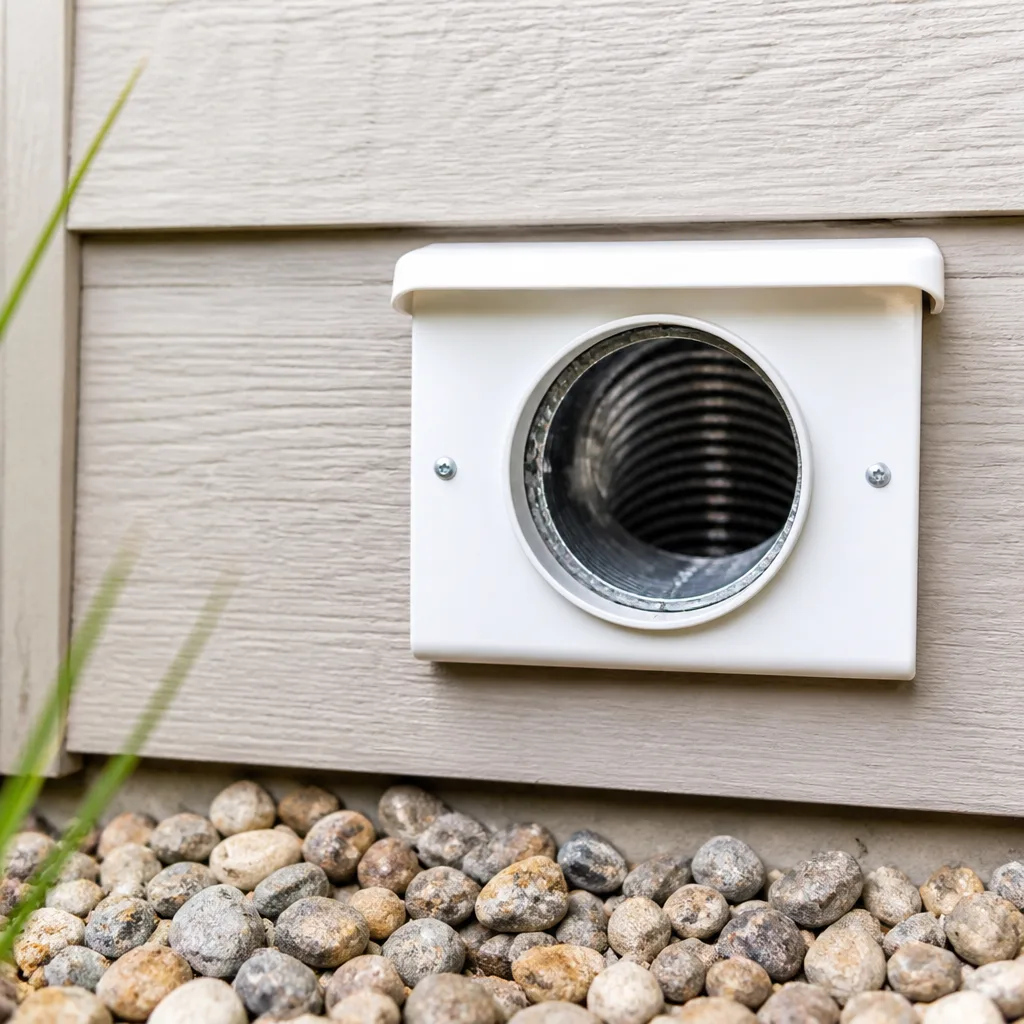 Dryer vent cleaning
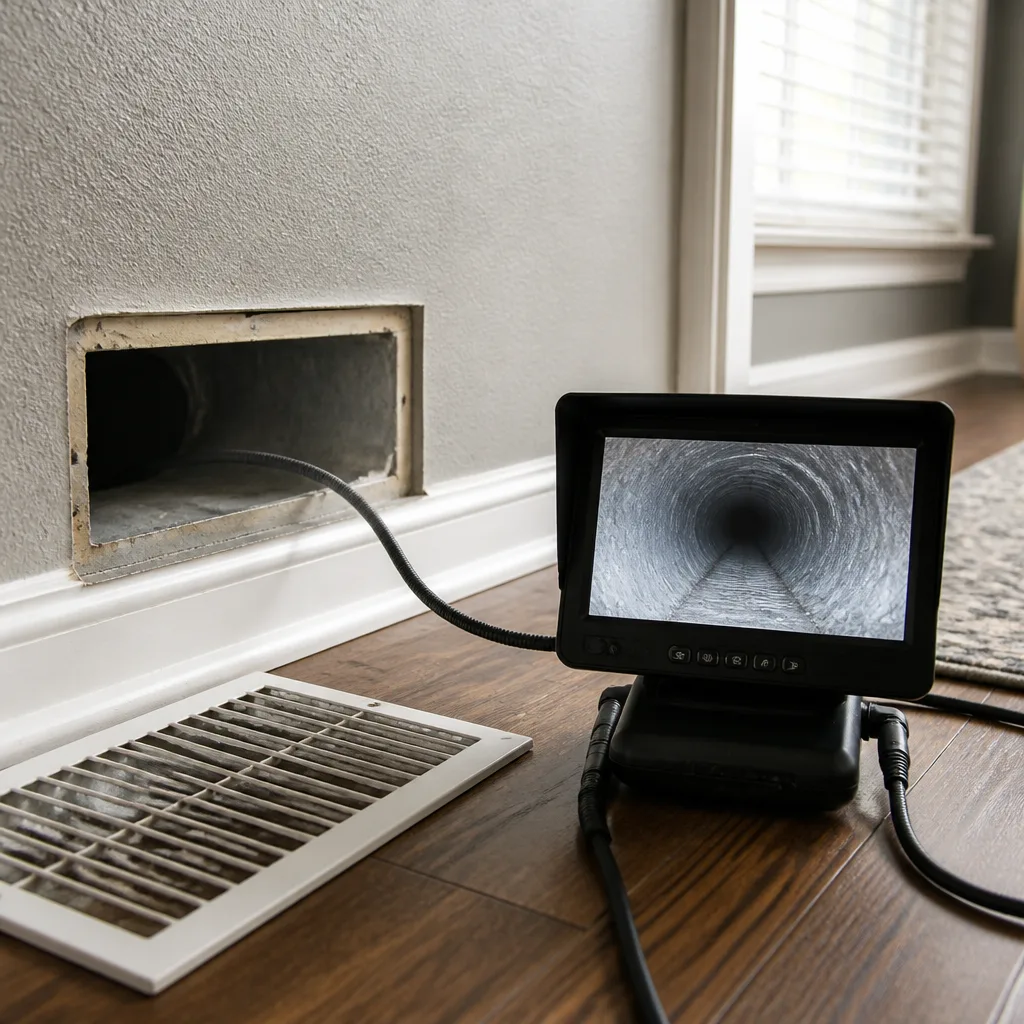 Camera inspection
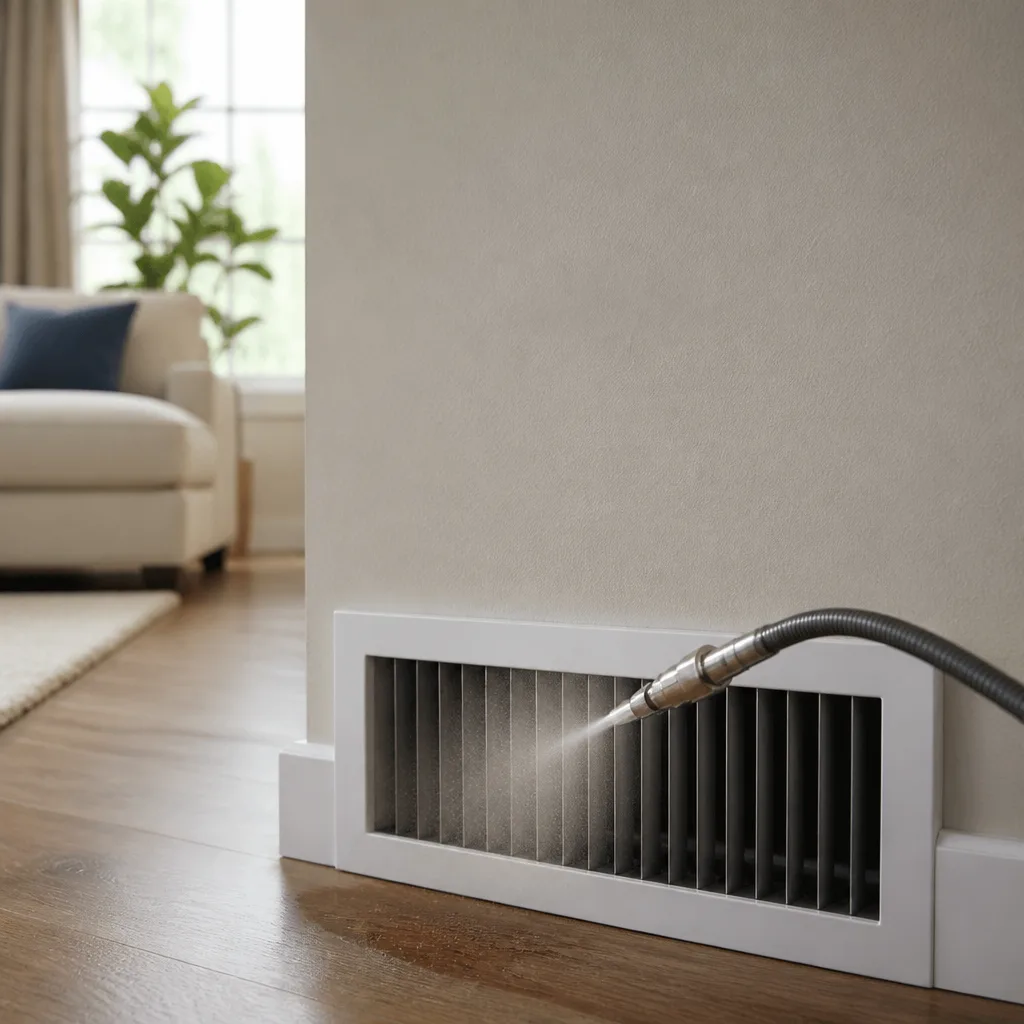 Sanitizing & deodorizing
Whole-system duct and dryer vent check with before-and-after photos - you see exactly what came out of your vents
That "$99 whole-house special" is a bait ad - the real number appears once they are in your hallway, or the "clean" is a shop-vac at the register. We photograph the inside of your ducts before and after instead.
DIY vs Professional Air Duct Cleaning: The Washington Park Homeowner’s Decision Guide
A shop vac pulls roughly 50 to 80 cubic feet of air per minute. A professional negative pressure system pulls 2,000 to 4,000. That gap is the whole conversation. It isn’t a matter of degree, like choosing between two grades of the same tool. It’s the difference between loosening debris so it resettles somewhere else and actually pulling it out of the system so it leaves the house. Everything else in this guide follows from that one physical fact. We’ll cover where debris goes when suction is too weak, the one narrow case where cleaning your own registers makes sense, why older Washington Park homes carry specific risks for a homeowner with a rented vacuum, and a decision matrix that tells you plainly which side of the line you’re on.
Quick Answer
DIY air duct cleaning is worth doing only for surface dust on accessible supply grilles in a system that was professionally cleaned recently. For anything involving the duct interior, filtration, moisture, animal activity, or post-renovation dust, DIY cleaning is either ineffective or actively harmful, and professional cleaning is the right call. The deciding factors are duct material, when the system was last cleaned, and what kind of contamination you’re dealing with.
Styles & brands we work with
- Whole-home duct cleaning
- Dryer vent cleaning
- Camera inspection
- Sanitizing & deodorizing
Table of Contents
- Why Negative Pressure Decides Everything
- Where Debris Goes When Suction Is Too Weak
- The One Scenario Where DIY Adds Real Value
- Why Older Washington Park Homes Are Risky for DIY
- Contamination Categories That Rule Out DIY
- The Decision Matrix
- What Professional Equipment Actually Does
- Common Mistakes to Avoid
- Frequently Asked Questions
Why Negative Pressure Decides Everything
Duct cleaning works on one principle: create lower pressure inside the duct than in the room, and air rushes in to fill the gap. Whatever that air carries comes with it. A vacuum with enough airflow keeps the whole duct under negative pressure while a technician agitates the debris loose from the walls. The agitation matters, but the pressure is what holds the debris in suspension until it reaches the collection unit instead of drifting back into living space.
Here’s where the home shop vac falls apart. It’s a positive-pressure machine at heart, blowing exhaust into the room while it sucks through a small hose. Even sealed to a register, it can’t hold an entire branch line under negative pressure. The airflow is so low that loosened dust settles as soon as agitation stops. You clean for an hour and the duct looks the same when you’re done, because almost nothing left the system.
A contact vacuum like a Rotobrush works differently. The brush head agitates the duct wall while the vacuum captures loosened material at the point of contact, and the whole assembly stays inside the duct under continuous suction. That’s why it handles the caked-on dust a shop vac just polishes.
What the numbers mean in practice
- 50 to 80 CFM – a consumer shop vac. Enough to lift surface dust from a register face. Not enough to carry debris through a 20-foot branch line.
- 500 to 900 CFM – a portable professional HEPA unit. Handles most residential systems when correctly sealed.
- 2,000 to 4,000 CFM – truck-mounted negative pressure. Holds the entire system under vacuum, which is what source removal actually requires.
If you take one thing from this guide, take that. Airflow, not suction at the nozzle, is what removes debris from a duct system. A shop vac has suction. It doesn’t have airflow. That’s the whole difference.
Where Debris Goes When Suction Is Too Weak
This is the part most DIY guides skip. Loosened debris doesn’t vanish because you turned on a vacuum. It moves, and where it moves matters. Under insufficient suction, dust and fiber leave the duct wall and take the path of least resistance, which is rarely the vacuum hose.
In our experience, this is where debris ends up after a weak DIY clean:
- At the next elbow or transition. Duct systems are full of turns, and air slows at every one. Debris drops out of suspension there and piles up. A weak vacuum moves dirt from a straight run into a corner, which is often worse than leaving it spread evenly.
- Against the register boot. Dust pushed toward a supply boot meets the grille and stops. Some of it blows into the room the next time the system runs.
- In the return plenum and on the blower wheel. Debris pulled off a branch line without capture flows back toward the air handler. It coats the blower and the evaporator coil, which cuts airflow and efficiency.
- In the flex duct liner. Flexible duct has ridges and a textured liner. Debris catches there and holds. Once caught, it takes mechanical agitation to release, and a shop vac provides none.
There’s a second problem. Agitating dust inside a wet or humid duct, or one with even a light microbial film, aerosolizes spores into the living space with no HEPA capture to stop them. The homeowner notices new allergy symptoms a day later and can’t explain why. The answer is usually that the cleaning released what was settled.
The One Scenario Where DIY Adds Real Value
There is a scenario where cleaning your own registers is worth the twenty minutes, and it’s narrower than most people expect. If your system was professionally cleaned recently, and the only issue is a visible dust film on the face of your supply and return grilles, then wiping those grilles is legitimate DIY work. The duct interior is already clean. You’re just removing what settled on the surface after the air handler pushed it out.
Here’s how to do it correctly:
- Turn off the system at the thermostat so the blower doesn’t run while you work.
- Remove the grille screws and set the grille aside.
- Wipe the grille face and the visible inside of the boot with a damp microfiber cloth. Damp, not wet. Dry cloth just moves dust into the air.
- Inspect the boot for anything that isn’t dust: fiberglass strands, dark staining, rust, or animal debris. If you see any of those, stop. That’s professional territory.
- Reinstall the grille and run the system on fan for ten minutes to clear any residual surface dust.
That’s the limit of useful DIY work. Grille faces and register boots. Nothing deeper. If you go past the boot into the branch line, you’re back to moving debris from one place to another without extracting it, and you’ve lost the value you were after in the first place.
Why Older Washington Park Homes Are Risky for DIY
Washington Park has a housing stock that spans a wide range of construction eras, and duct systems from different periods carry different risks for a homeowner with a shop vac. The physical layout of the neighborhood, with its mature tree canopy and tight lots, also means return ductwork and crawlspace runs are common in ways you don’t see in newer suburban construction.
Three duct types in older Washington Park homes are particularly unforgiving of DIY approaches:
- Flex duct. The inner liner is a thin plastic film supported by a wire helix. A shop vac nozzle dragged through it can tear that liner or pull it loose from the helix. Once torn, the liner collapses into the airstream and restricts airflow permanently. The fix is replacing the run, which costs far more than the cleaning you were trying to avoid.
- Internal duct liner. Sheet metal ducts from certain decades were lined on the inside with acoustic insulation. That liner has an exposed fibrous surface. A shop vac brush dragged against it releases fiberglass fibers into the airstream, and those fibers go straight into the living space the next time the system runs.
- Fiberglass board duct. Some runs, especially in crawlspaces, were built from rigid fiberglass board with a foil or coated face. The material is fragile. Any mechanical contact from inside breaks the face and exposes raw fiberglass. This is the worst-case DIY outcome, because the damage is invisible from outside.
The professional version of this same work uses specific tools for specific materials. A Rotobrush contact vacuum with the correct brush head for flex duct won’t tear the liner. A soft-bristle head for fiberglass board won’t break the face. That’s not a small detail. It’s the reason trained crews can clean a 1970s Washington Park home safely while a homeowner with a rental can’t.
Contamination Categories That Rule Out DIY
There’s a line where DIY cleaning stops being merely ineffective and starts being a hazard. That line is contamination. If any of the following is present, air duct cleaning is professional work, and doing it yourself without containment and HEPA capture can spread the problem through the house.
- Visible mold growth inside the duct or on the air handler. Cleaning mold without addressing the moisture source just redistributes spores. Professional work includes an inspection to find the moisture, cleaning with HEPA extraction, and sanitizing with an air scrubber to capture what’s released.
- Rodent or pest debris. Droppings, nesting material, and urine-stained insulation carry real health risk when agitated. This is the category where DIY can be genuinely dangerous, not just unhelpful. A negative pressure system with HEPA filtration on the exhaust is the standard for this work.
- Post-renovation drywall dust. Fine gypsum dust is exceptionally mobile. A shop vac can’t capture it, and it settles on every surface and into every duct branch during a renovation. Professional cleaning after a major remodel is standard practice, not a luxury.
- Sewer or musty odors with no visible source. Odor without a visible cause usually means moisture or organic contamination somewhere in the return side. A professional inspection finds it. A shop vac doesn’t.
- Fire or smoke residue. Smoke particles are microscopic and cling to duct surfaces. Standard cleaning doesn’t touch them. This requires specialized chemical treatment and air scrubbing.
- Water damage or a flooded crawlspace under the ductwork. Ducts that have been submerged or exposed to prolonged moisture need to be evaluated for replacement, not just cleaned. A technician can tell you which.
If you’re not sure which category your home falls into, the right move is an inspection, not a vacuum. Our air duct cleaning service starts with a camera inspection of the duct interior so the recommendation is based on what’s actually there, not a guess.
The Decision Matrix
Use this matrix to decide whether DIY makes sense or whether it’s time to call someone. Match your home to the closest row and follow the recommendation.
- Home age under 10 years, last cleaning within 3 years, no moisture issues, flex or metal duct in good condition: DIY register cleaning is appropriate. Wipe the grilles, inspect the boots, stop there. Schedule professional cleaning when you hit the 3-to-5-year mark.
- Home age 10 to 30 years, no known last cleaning, no visible contamination, metal duct: Professional cleaning is recommended to establish a baseline. After that, register-level DIY maintenance is fine.
- Home age 30-plus years, unknown cleaning history, flex or fiberglass board duct: Professional cleaning is required. DIY risks material damage you can’t see and won’t know about until airflow drops.
- Any home age, recent renovation or remodel: Professional cleaning is required. Drywall dust is the single most common post-renovation duct problem in Washington Park homes.
- Any home age, visible mold, musty odor, or moisture issue: Professional inspection and cleaning is required. Not a DIY case. Not a delay case.
- Any home age, rodent activity or pest debris: Professional cleaning with HEPA containment is required. Do not agitate this yourself.
- Any home age, allergy symptoms or asthma flare-ups with no other explanation: Professional inspection is worth the call. Something is in the system and you don’t know what.
If you’re not sure which row fits your Washington Park home, the inspection is the answer. Our technicians have up to 9 years of experience reading exactly this kind of ambiguity and telling homeowners plainly what they found.
What Professional Equipment Actually Does
The distinction between a shop vac and a professional duct cleaning isn’t a marketing line, it’s a specific set of tools doing specific jobs. Knowing what those tools are tells you what you’re paying for and what a quote should include.
Here’s the equipment landscape and what each piece does:
- Rotobrush contact vacuum system. A rotary brush head on a flexible shaft that runs inside the duct while the vacuum captures loosened material at the point of contact. Different brush heads for different duct materials. This is the tool that actually removes adhered dust from duct walls.
- Nikro HEPA extraction unit. A high-capacity vacuum with HEPA filtration on the exhaust. Used for source removal on systems where contamination is moderate to heavy. Every particle that comes out of the duct is captured before it re-enters the room.
- Abatement Technologies air scrubber. A negative air machine with HEPA filtration. Used during sanitizing work to keep the room under negative pressure and capture airborne contaminants released during cleaning. This is commercial-grade containment equipment applied to residential work.
- Negative pressure enclosure and truck-mount. For full-system cleaning, the whole duct network is put under negative pressure while each branch is cleaned. That’s what makes 2,000-plus CFM of airflow possible at the register.
- Duct sealing equipment. Cleaning without sealing leaves leaks that let dust back in and drive up energy bills. Our HVAC cleaning service pairs the cleaning with sealing so the system stays clean longer.
- Air sanitizing systems. Used after mechanical cleaning to address microbial contamination on duct surfaces. Abatement technologies scrubbers stay in place during this phase. Most basic duct cleaners skip this step entirely.
We also work with Honeywell and Aprilaire product lines when a homeowner wants filtration or humidity control upgraded as part of the same visit. Those are the two brands most commonly found in Washington Park homes, and integrating them into the cleaning means the IAQ upgrade happens when the system is already open, not as a second service call.
For dryer vent work, the tooling is different again but the principle is the same. A dryer vent cleaning properly done uses a rotary brush and vacuum setup that removes lint from the full length of the run, not just the first few feet. We see a lot of Washington Park homes with long, complicated dryer runs, and partial cleaning is common in those.
Common Mistakes to Avoid
- Assuming a shop vac sealed to one register cleans the whole system. It doesn’t. Airflow enters at the open registers and the vacuum fights all of them at once. Sealing one register while the others are open reduces the airflow at the sealed register to nearly zero.
- Using a shop vac on flex duct at all. The nozzle catches the liner and tears it. Washington Park has enough flex duct in its older housing stock that this is a common and expensive DIY outcome.
- Cleaning ducts after a renovation without HEPA containment. Drywall dust is fine enough to pass straight through a shop vac filter. It ends up in the air and on every surface in the house. This is the one mistake that makes the indoor air worse, not better.
- Cleaning mold without finding the moisture source. Removing visible growth and leaving the moisture means the mold is back in weeks. The source has to be found first. That’s what an inspection is for.
- Believing a low advertised price covers the whole system. Dupes in this trade come from per-vent pricing that balloons on site, or from a “full house” quote that’s actually a register wipe. Ask for a flat price per system agreed before work starts and a scope that includes the air handler and return side.
- Skipping the duct sealing after cleaning. A clean duct with unsealed joints gets dirty again fast. Homeowners who see a duct cleaning and a duct sealing as two separate services end up paying for one and needing the other. Our air duct cleaning Washington Park service covers sealing as part of the same visit.
- Not documenting the before-and-after. If you can’t see what came out, you’re trusting the technician’s word. Before-and-after photos of your own ducts are the standard. Ask for them upfront.
See the difference
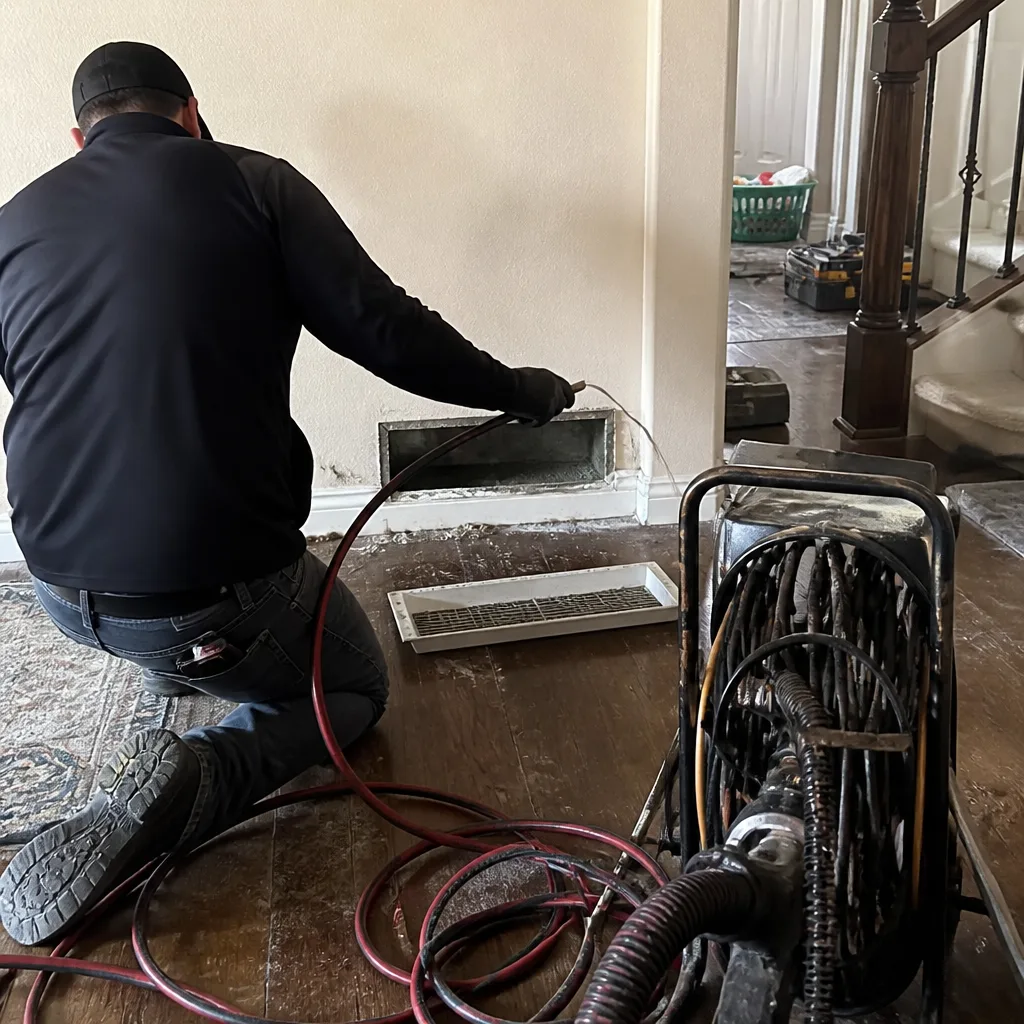 Before
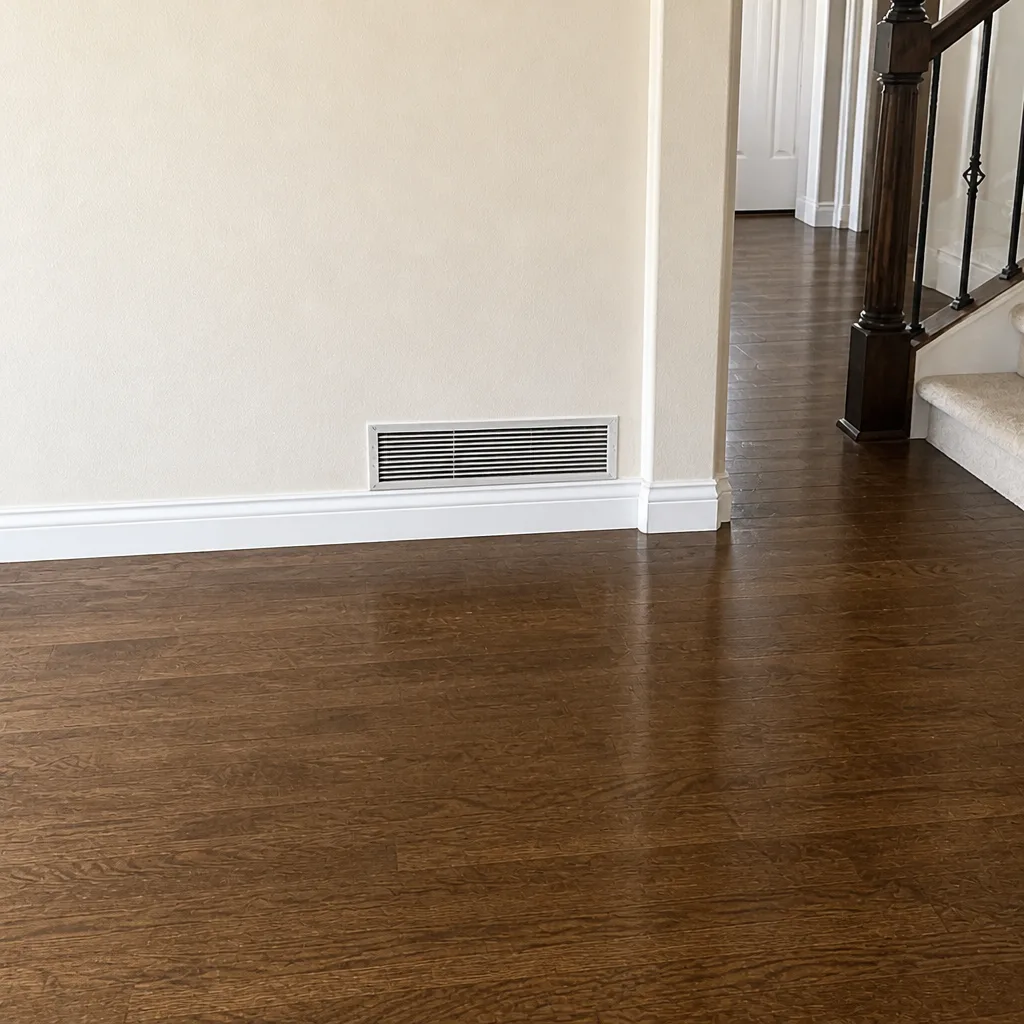 After
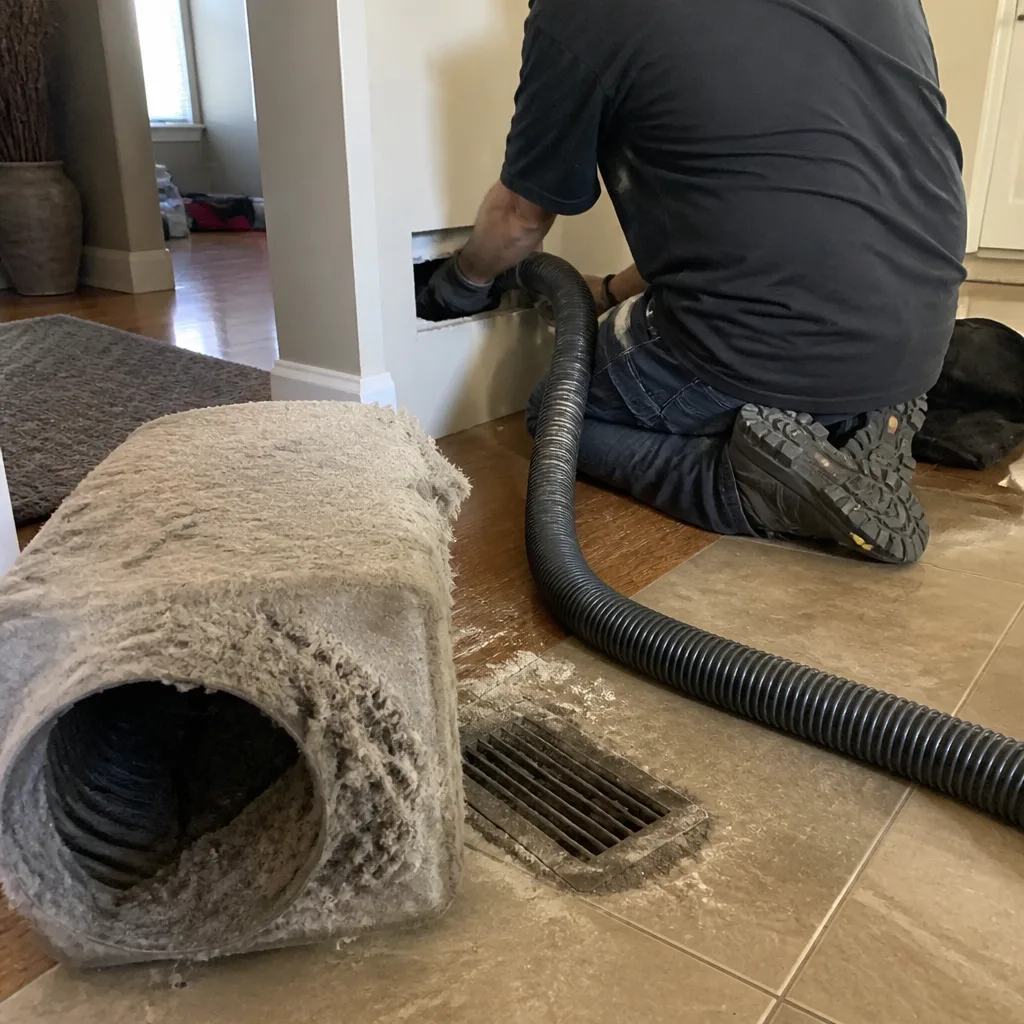 Before
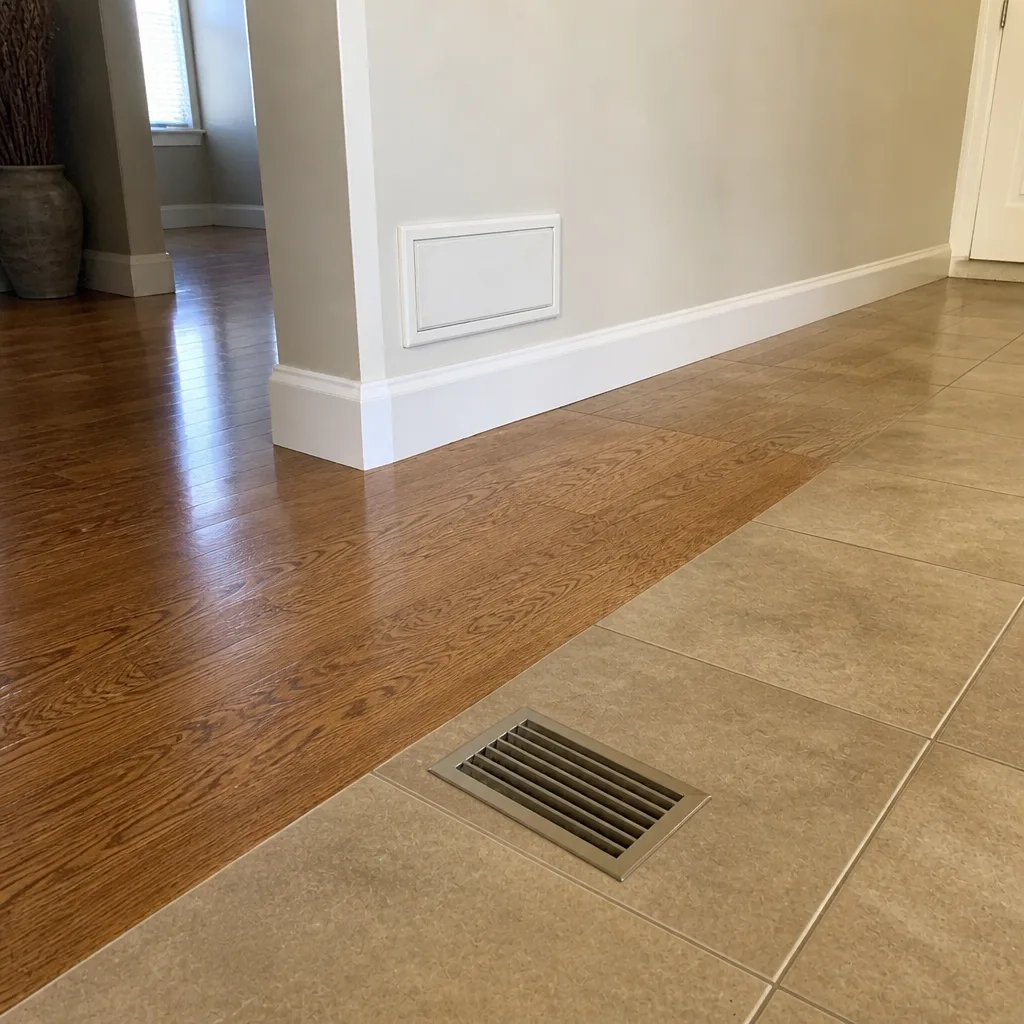 After
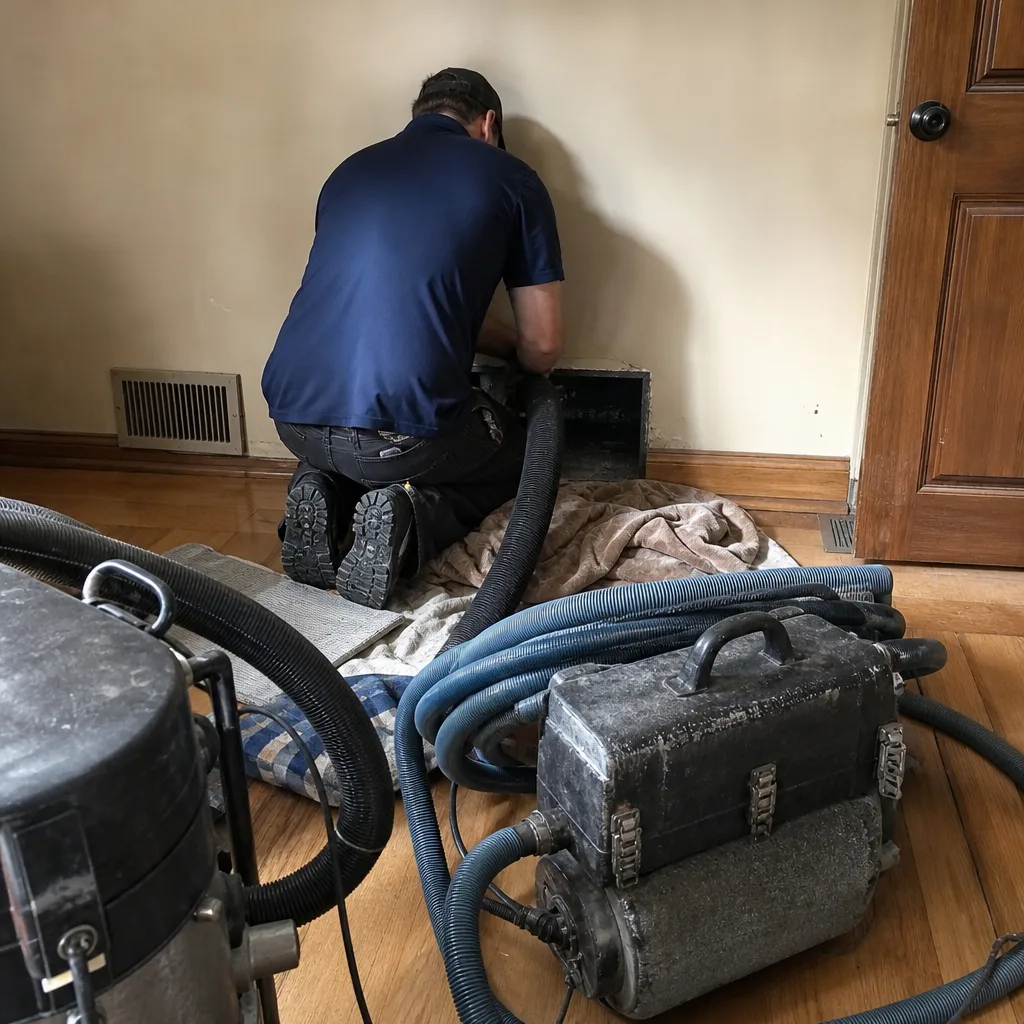 Before
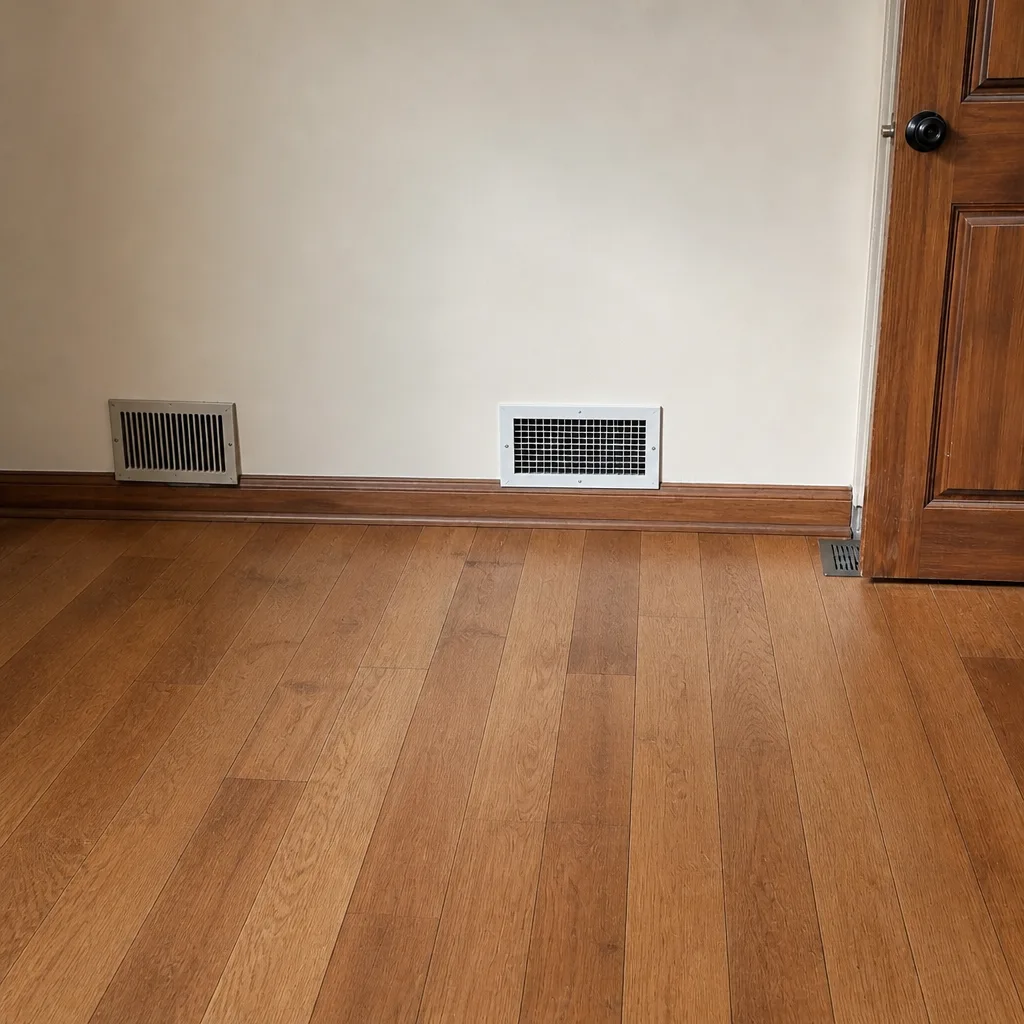 After
When to Call a Professional
Call a professional for any of the following: visible mold or musty odor with no source, rodent activity or pest debris in the ductwork, recent renovation or remodeling, allergy or asthma symptoms with no clear explanation, a system older than 10 years with no known cleaning, flex duct or fiberglass board duct that hasn’t been inspected, inconsistent airflow between rooms, or rising energy bills with no other cause. Those are the cases where the physics and the material risks both point away from DIY.
Air Duct Cleaning Washington Park offers free estimates in Washington Park. Call (866) 947-8103. We answer 24/7. Fast dispatch from 7am to 7pm, Sunday through Friday.
The estimate is written, the price is set per system before work starts, and our technicians have up to 9 years of experience with the material types found in Washington Park homes.
Frequently Asked Questions
Pricing is per system, set by a written estimate before work begins, and depends on the number of runs, duct material, and contamination level. Typical estimates in the Washington Park market fall in a range that reflects a full-system clean with professional equipment. A cheap coupon price from a duct cleaner usually reflects a register wipe, not a duct clean. Call (866) 947-8103 for an exact quote. Estimates are free.
You can clean the visible surface of your registers and boots, but you can’t clean the duct interior with a shop vac. The airflow is too low to carry debris out of the system, and the nozzle risks tearing flex duct liner or fiberglass board. Register-level cleaning after a professional clean is fine. Anything deeper isn’t.
Cheap quotes almost always cover less: a shop vac at the registers, no air handler cleaning, no return side, no camera inspection. The low price is designed to get a technician to your door so a larger invoice can be presented once work starts. A flat price per system agreed upfront, backed by before-and-after photos, is the honest way to quote. Call (866) 947-8103 for an estimate that covers the whole system.
Ask for before-and-after photos of your own ducts and a camera inspection of the interior before and after cleaning. A technician using a Rotobrush contact vacuum and a Nikro HEPA extraction unit can show you what came out. If a quote doesn’t include photos as standard, it’s worth calling someone who does. Our estimates are free – call (866) 947-8103.
Most homes in Washington Park do well with professional cleaning every 3 to 5 years. Homes with pets, anyone with allergies or asthma, or homes with a lot of dust on the register faces need it more often. Homes with recent renovation, mold, or pest activity need it as soon as the problem is identified, not on a schedule.
Cleaning is mechanical removal of debris from duct surfaces. Sealing addresses gaps at joints and connections that let dust in and air out. Sanitizing treats microbial contamination on duct surfaces after cleaning is done. All three can happen in one visit, which is what full-system scope means. Most basic duct cleaners do only the first step and skip the other two.
The Bottom Line
DIY duct cleaning is legitimate for exactly one job: surface dust on accessible grilles and register boots in a recently cleaned system. Anything deeper runs into the physics of negative pressure, and a shop vac can’t hold a duct system under negative pressure no matter how well you seal it. Older flex, fiberglass board, and internally lined ducts in Washington Park homes add material damage risk that’s invisible until airflow drops. Contamination – mold, rodent debris, renovation dust – moves the answer from ineffective to hazardous. Use the decision matrix, and when you’re not sure, call for an inspection. The estimate is free, the price is per system, and you’ll know what’s actually in your ducts before anyone touches them.
Call (866) 947-8103. We answer 24/7. Fast dispatch from 7am to 7pm, Sunday through Friday.
Written by the team at Air Duct Cleaning Washington Park.