
Last updated November 25, 2026
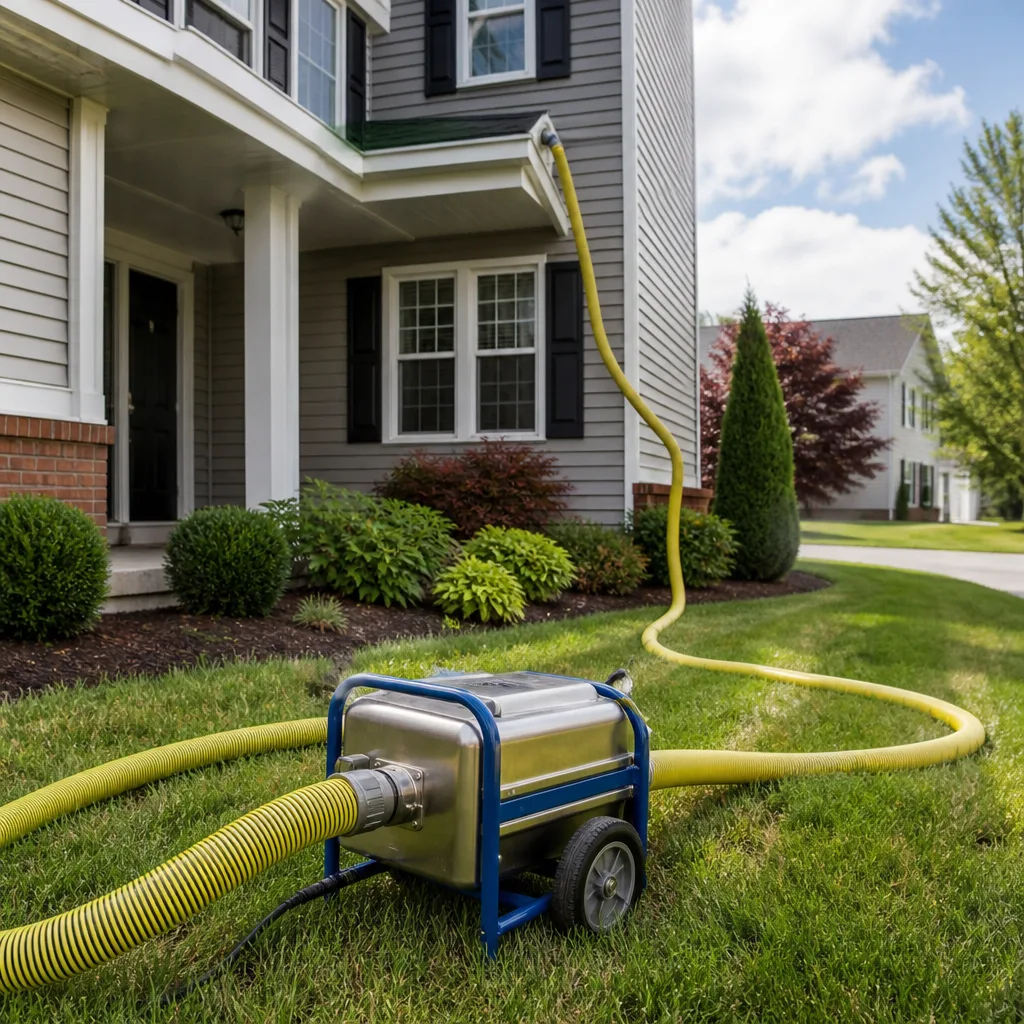 Whole-home duct cleaning
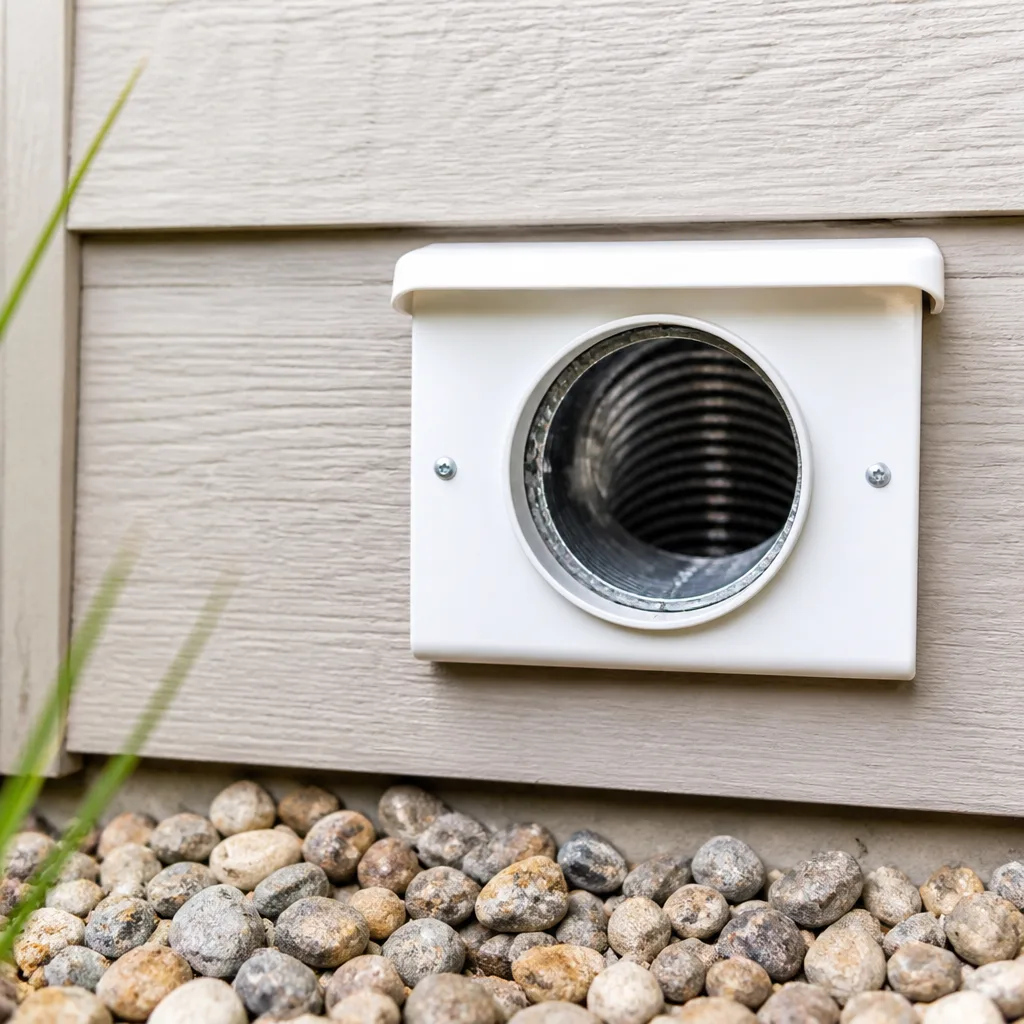 Dryer vent cleaning
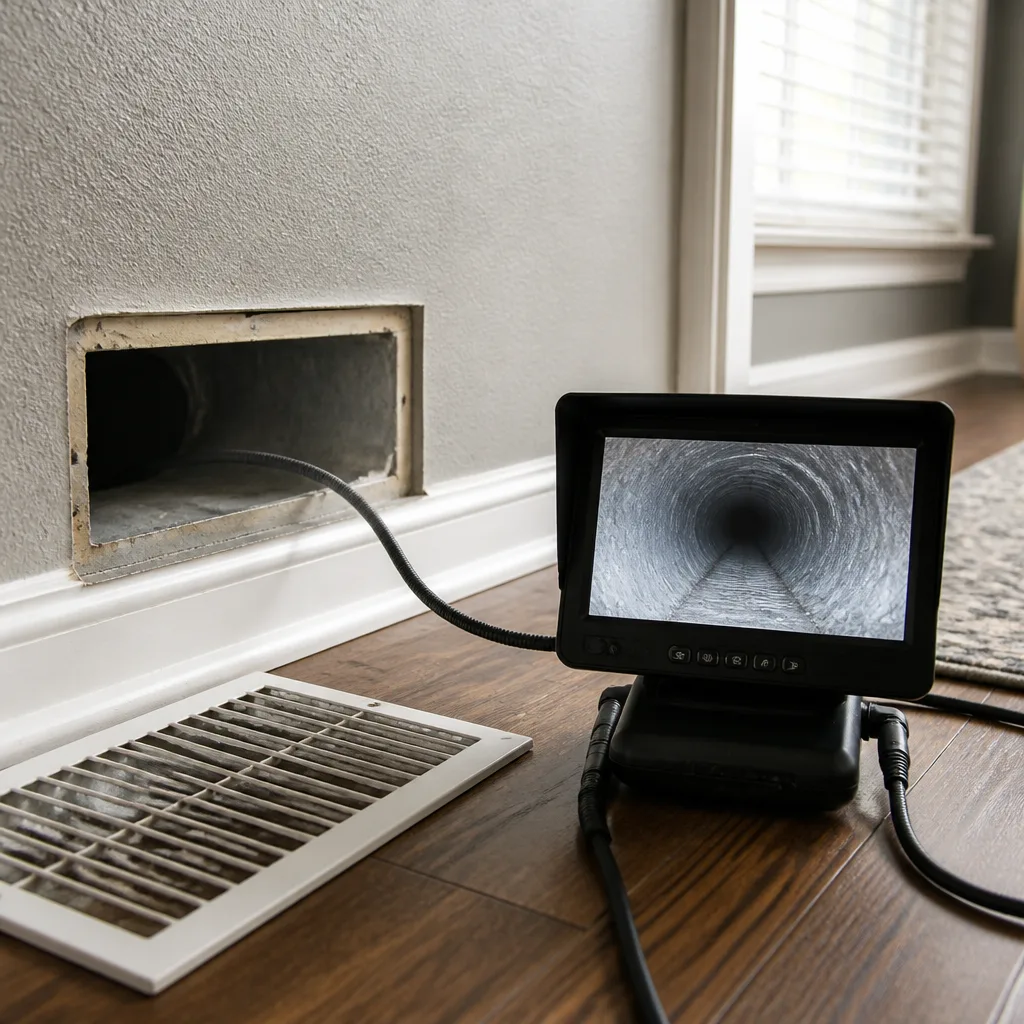 Camera inspection
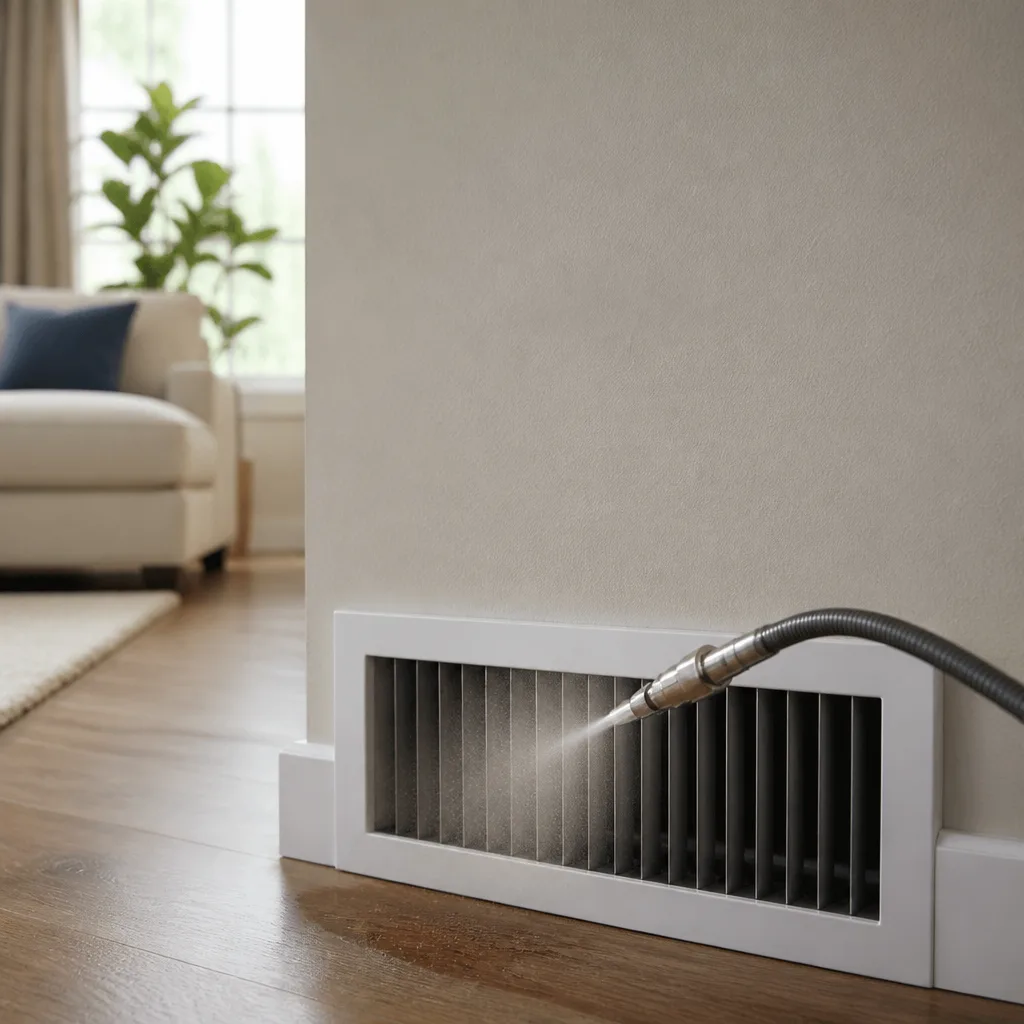 Sanitizing & deodorizing
Whole-system duct and dryer vent check with before-and-after photos - you see exactly what came out of your vents
That "$99 whole-house special" is a bait ad - the real number appears once they are in your hallway, or the "clean" is a shop-vac at the register. We photograph the inside of your ducts before and after instead.
Air Duct Cleaning Warning Signs: A Washington Park Homeowner’s Reference Guide
Here’s a distinction that changes everything about how you read your own house: most duct cleaning warning signs get lumped together in vague terms like “musty smell” or “more dust than usual,” but each symptom actually points to a specific type of contamination with a specific remediation path. A musty smell when your heat first kicks on in October is not the same problem as a musty smell that persists through the whole heating season. The first is usually surface debris burning off; the second suggests active microbial growth. Treating them identically is how remediation jobs get missed. This guide decodes what your senses and your HVAC system’s behavior are actually telling you in Washington Park.
Quick Answer
The main air duct cleaning warning signs are persistent musty or chemical odors that don’t fade after the system runs, visible dark debris or staining at registers, uneven room temperatures, HVAC run cycles that keep getting longer, and allergy-type symptoms that ease when you leave the house. Any one of these is a routine cleaning trigger. Suspected mold inside the ductwork, rodent droppings or activity, or water intrusion into the HVAC system are different: those call for a professional assessment before any cleaning starts.
Styles & brands we work with
- Whole-home duct cleaning
- Dryer vent cleaning
- Camera inspection
- Sanitizing & deodorizing
Table of Contents
- What Your Nose Is Telling You: A Symptom-to-Cause Diagnostic
- Reading Visible Debris at Your Registers
- HVAC Performance Signs That Point to Duct Restriction
- Household Health Patterns vs. Ambient Allergen Exposure
- Warning Signs That Need Assessment Before Cleaning
- Why Washington Park Homes See These Signs
- What a Proper Duct Cleaning Job Actually Involves
- When to Call a Professional
What Your Nose Is Telling You: A Symptom-to-Cause Diagnostic
Odor is the most useful diagnostic signal a homeowner has, and the most misinterpreted. The key variable is timing. Does the smell appear only in the first few minutes of a heating or cooling cycle, or does it stay in the air for the whole season? That single question separates a surface issue from a system issue.
The four odor types and what they suggest
- Musty, cellar-like, or damp-earth. Usually points to moisture where it shouldn’t be: condensation on evaporator coils, a duct run passing through a humid crawlspace or basement, or microbial growth on insulation lining. When it fades after a few minutes of runtime, suspect light surface buildup. When it lingers through the season, suspect active growth and get an assessment.
- Burnt or hot-dust smell at startup. Very common in the first heat of the season and usually harmless: dust sitting on the heat exchanger burning off. If it comes back mid-season or smells sharp and electrical, stop using the system and have it looked at.
- Chemical or solvent smell. Can indicate off-gassing from new building materials, stored products pulled into the return, or a refrigerant or combustion issue. Chemical odors that appear suddenly with no obvious source deserve an HVAC inspection rather than a cleaning.
- Earthy, animal, or ammonia-tinged smell. This is the one homeowners most often ignore and shouldn’t. It can indicate rodent activity in the duct system, and that changes the job entirely.
Why location matters as much as type
Which rooms smell matters too. An odor concentrated in one room usually means a problem in that branch run or near that register. An odor that shows up everywhere the moment the blower starts means the contamination is upstream, in the main trunk, the return plenum, or the air handler itself. Our technicians have up to 9 years of experience reading that pattern, and it shapes where the work starts.
Reading Visible Debris at Your Registers
Pull a register cover and look inside with a flashlight. Color, texture, and distribution each tell you something different, and the combination is more informative than any single observation. What you see at the register is a sample of what’s coating the whole run behind it.
Color
- Gray or light tan, powdery. Ordinary household dust and lint. This is the routine case and the most common thing we find in Washington Park homes.
- Black or dark gray, sooty. Can indicate candle soot, fireplace backdraft, or vehicle exhaust drawn in through a garage-adjacent return. Worth noting where it appears.
- Greenish-black or patchy dark spotting on the duct lining. This is the pattern that warrants a professional assessment for mold before anyone puts a vacuum to it. Cleaning first can spread spores.
- Rust-colored staining. Points to moisture, either condensation or a leak. Fix the water source or the contamination returns.
Texture and distribution
Dry and flaky suggests settled dust. Sticky or greasy suggests cooking aerosol that has traveled through the return, common in homes with open kitchens. Furry or fibrous buildup suggests insulation breakdown, meaning duct lining is shedding into the airstream. Distribution matters too: debris concentrated at the registers closest to the air handler suggests the main trunk is the source, while debris spread evenly across every register suggests system-wide accumulation.
The three-step check
- Remove one register cover in the room you use most and one in the room you use least.
- Photograph the inside of both with a flashlight for comparison, and note the date.
- Repeat the same check after the next full season of heating or cooling and compare. Visible increase over one season tells you more than any single snapshot.
HVAC Performance Signs That Point to Duct Restriction
Your HVAC system is a diagnostic instrument if you know which readings to watch. Restricted or leaking ducts don’t just waste energy; they distort how the whole system performs, and the pattern of distortion tells you whether the problem is blockage, leakage, or both.
Uneven room temperatures
Some variation between floors is normal. What isn’t normal is a room that used to keep up and now doesn’t, especially if it’s at the end of the longest duct run. That’s the signature of a restricted branch line or a disconnected duct joint dumping conditioned air into a wall cavity or attic.
Longer run cycles
If you notice the system running noticeably longer than it used to for the same outdoor conditions, airflow is being lost somewhere. Duct leakage is a common culprit, and it’s why duct sealing belongs in the same visit as cleaning rather than in a separate appointment later.
Rising energy bills
A bill that climbs while your habits and the weather hold steady is a signal worth investigating. We avoid quoting savings percentages because every house is different, but the mechanism is simple: air you paid to condition is escaping through leaks before it reaches the room. Compare the same billing period year over year rather than month over month, since seasonal swings muddy the picture.
Other performance flags
- Weak airflow at registers closest to the air handler, which can indicate a main trunk issue rather than a branch problem.
- Whistling or rattling at registers, which suggests a pressure imbalance from restriction or leakage.
- Excess dust settling on horizontal surfaces within days of cleaning, which points to debris being redistributed through the supply side.
Household Health Patterns vs. Ambient Allergen Exposure
The distinction between duct-related symptoms and ambient allergy exposure matters because the treatments are completely different, and getting it wrong means spending money on the wrong solution. Ambient allergens come from outside and from furnishings. Duct contamination is delivered to you, room by room, every time the blower runs.
The pattern that points to ducts
- Symptoms that ease noticeably when you’re away from home for a stretch and return within a day of coming back.
- Symptoms that cluster in specific rooms rather than following you around the house.
- Morning congestion that clears an hour or two after you get up and leave the bedroom.
- Worsening when the system first starts for the season, then a plateau.
The pattern that points to ambient exposure
Symptoms that track with outdoor pollen counts, follow you from room to room equally, or worsen after vacuuming upholstery and carpets are more consistent with ambient sources. Washington Park sits at elevation along the Front Range, and the pollen season here is real, so ambient exposure is a genuine possibility that shouldn’t be dismissed. The right response is to test the pattern over a few weeks before assuming the ducts are the cause.
What we won’t do
We won’t diagnose a medical condition. If symptoms are persistent or serious, talk to a doctor. What we can do is inspect the system and show you what’s in it, which either confirms a duct source or rules it out. Either answer is useful when you’re deciding where to spend money.
Warning Signs That Need Assessment Before Cleaning
Not every warning sign calls for the same response. Splitting them into three tiers prevents two costly mistakes: cleaning over a contamination problem, and paying for remediation on a system that only needed routine service.
Tier 1: Routine cleaning triggers
- Visible dust and lint accumulation at registers.
- Musty smell that fades shortly after startup.
- Recent renovation or remodeling work in the home, which loads the system with drywall and sawdust.
- A new move-in where the previous occupants’ cleaning history is unknown.
- Pets in the home and a visible layer of hair and dander at the returns.
Tier 2: Professional assessment before cleaning
- Suspected mold. Visible dark spotting on duct lining or insulation, or a musty smell that persists through the whole season. Cleaning a mold-contaminated system without proper containment spreads spores through the house.
- Rodent activity. Droppings, nesting material, or an earthy-animal smell in a duct run. This requires containment and sanitizing, not a standard vacuum pass, because of the health risk from disturbed droppings.
- HVAC water intrusion. Rust staining, standing water in a drain pan, or a saturated duct run. The water source gets fixed first, then the system is assessed and sanitized.
- Asbestos concerns in older ductwork. If the duct board or wrapping looks fibrous and the home is older, ask your city building department and a qualified inspector before anyone disturbs it.
Tier 3: Stop the system and call
- A sharp electrical or burning smell that returns after startup.
- Visible soot around registers.
- Any smell of gas. Get out of the house and call your gas utility first, before any duct contractor.
Why Washington Park Homes See These Signs
Washington Park sits at elevation along the Front Range, which shapes the local version of this problem in ways a generic guide won’t tell you. The heating season here is long, the air is dry for much of the year, and homes tend to run the furnace hard from October well into spring. Long duty cycles mean more air moving through the duct system for more hours, which accelerates the accumulation that shows up as debris at the registers and a smell at startup.
What the local housing stock contributes
Washington Park’s mix of older homes and newer infill means you’ll encounter very different duct systems on the same block. Older homes often have original sheet-metal trunk lines with branch runs that have been modified during remodels, and those modifications are where disconnected joints and leakage usually appear. Newer construction tends to use flexible duct, which routes around obstacles but can develop kinks and sagging runs that restrict airflow. Both patterns produce the same symptoms on your end, but they get diagnosed and repaired differently.
The dry-air factor
Low winter humidity in Washington Park means more airborne particulate stays suspended rather than settling, so a contaminated system gets delivered deeper into the living space. It also means static and dust on surfaces show up faster after a cleaning, which is one reason we recommend a documented before-and-after record rather than asking you to judge by feel. Dry air also dries out duct insulation over time, which can make older lining brittle and more likely to shed into the airstream.
What to note about your own home
Write down which rooms feel cold in winter, which registers show the most debris, and when the smell appears. Our technicians have up to 9 years of experience in this environment, and a homeowner’s three-sentence log of what changed and when often shortens the inspection considerably. That’s the kind of detail a phone conversation can’t capture.
What a Proper Duct Cleaning Job Actually Involves
A proper job is defined by its equipment and its scope, not its speed. Consumer shop vacs and one-pass sweeps don’t remove adhered contamination, and they don’t verify the result. Here’s what the process actually looks like when every part of the air pathway is treated as one system.
Step-by-step: how a documented job runs
- Inspection first. Every job begins with a look inside the system before anyone starts cleaning. We show you what we find, on camera or in photos, so you know what the work is addressing.
- Negative-pressure setup. A Rotobrush contact-vacuum system puts the duct run under negative pressure while agitating the duct walls, so dislodged debris travels to the collection unit instead of into your rooms.
- Containment and HEPA extraction. Nikro HEPA extraction handles the fine particulate the contact vacuum loosens. On contamination-level work, Abatement Technologies air scrubbers provide the containment control you’d otherwise only see on commercial remediation projects.
- Source cleaning of HVAC components. The blower, coils, and cabinet are part of the air pathway. Cleaning the ducts and leaving the air handler dirty only re-contaminates the system. That’s why HVAC cleaning belongs in the same visit.
- Duct repair and sealing. Cleaning without sealing leaves the leaks that drove the energy loss and the airflow problems in the first place. Sealing addresses the cause, not just the symptom.
- Sanitizing. Mechanical cleaning removes debris. Sanitizing targets the microbial contamination that debris and moisture leave behind, which is the step most basic duct cleaners skip entirely.
- Documentation. Before-and-after photos of your own system, not stock images, are the proof that the work happened. Ask for them every time.
Why the equipment names matter
When you compare quotes, ask which equipment the contractor uses. Rotobrush, Nikro, and Abatement Technologies are the names you want to hear, because these are the systems remediation contractors use for contamination-level work. A quote that can’t name its equipment is a quote worth questioning. Professional-grade equipment, not consumer shortcuts, is the difference between cleaning a system and actually cleaning it.
The whole system under one roof
A full-system scope covers air ducts, dryer vents, HVAC components, duct sealing, and air sanitizing in one coordinated visit, which means one inspection, one documentation package, and no coordinating multiple contractors. It also means nothing gets missed at the boundary where one contractor’s work ends and another’s begins. For homeowners looking at long-term indoor air quality, Honeywell and Aprilaire product lines cover filtration and humidity control as upgrades inside the same service call, which for a dry Front Range climate is often the more useful long-term investment than the cleaning itself.
Common Mistakes to Avoid
- Treating every odor as routine. A smell that fades after startup and a smell that persists all season are different problems. Assuming it’s always the harmless kind is how microbial growth gets cleaned over instead of remediated.
- Cleaning before fixing the water source. If there’s rust staining, condensation, or a wet drain pan, cleaning the ducts without fixing the moisture guarantees the contamination returns. Water first, then cleaning.
- Accepting per-vent pricing. A per-vent price rewards counting registers, not cleaning the system. Ask for one flat price per system agreed before work starts.
- Skipping the HVAC components. Clean ducts feeding a dirty blower and coil re-contaminate quickly. The air handler is part of the pathway.
- Judging the job by speed. A thorough job takes as long as it takes: inspection, containment, extraction, sealing, and sanitizing. A quick pass isn’t the same service.
- Not asking for photos of your own system. Before-and-after photos of your ducts are the only real confirmation the work was done where it should have been. If a contractor can’t provide them, keep asking questions.
- Overlooking the dryer vent. It’s a separate fire and efficiency concern, and in Washington Park’s dry climate lint builds and dries into a flammable mat faster than dense, humid air would allow. It belongs on the same maintenance checklist.
See the difference
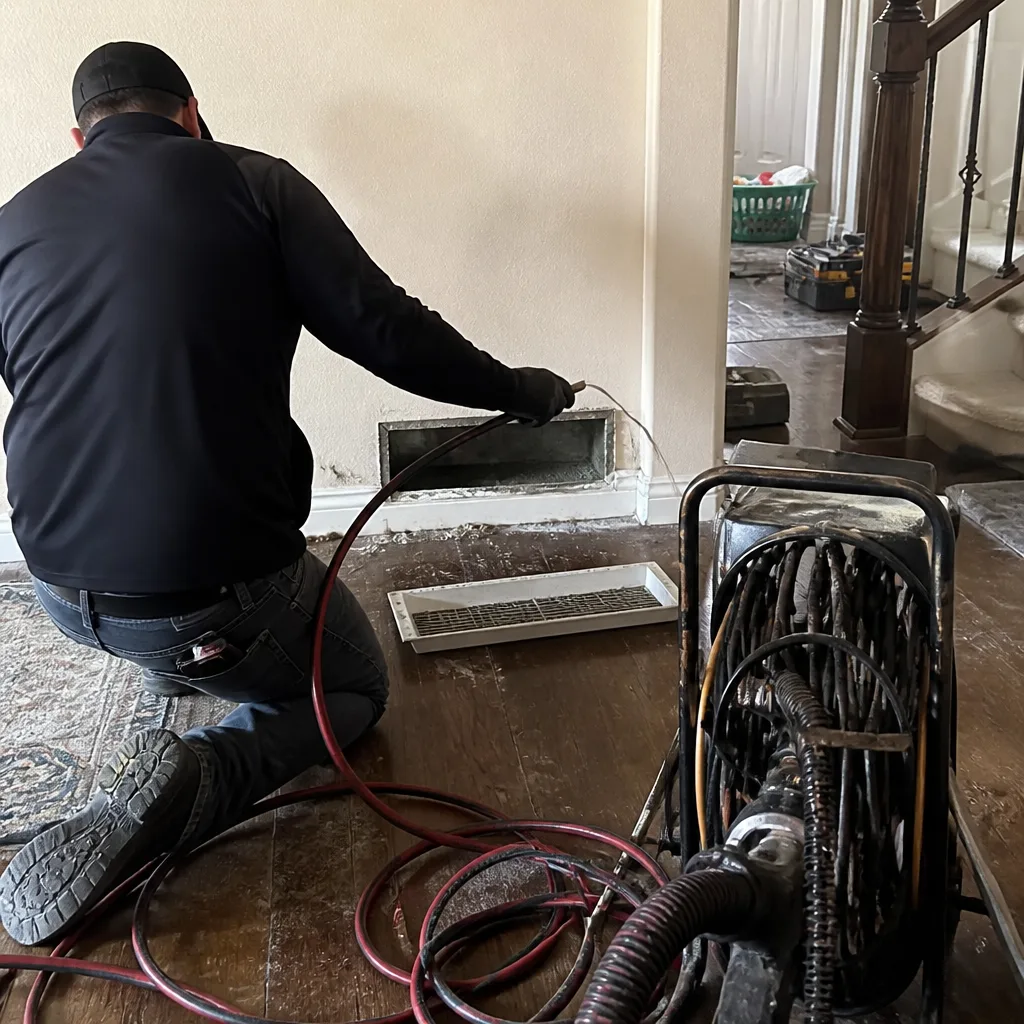 Before
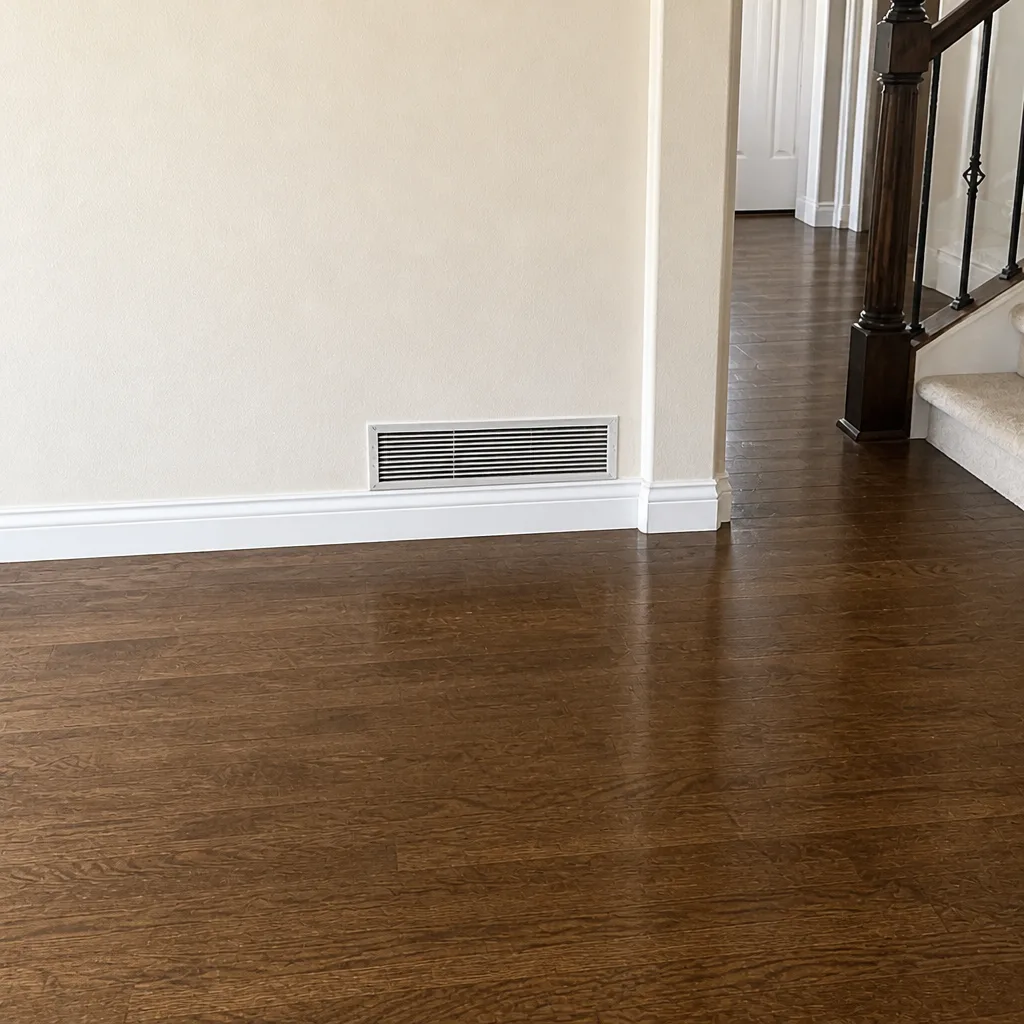 After
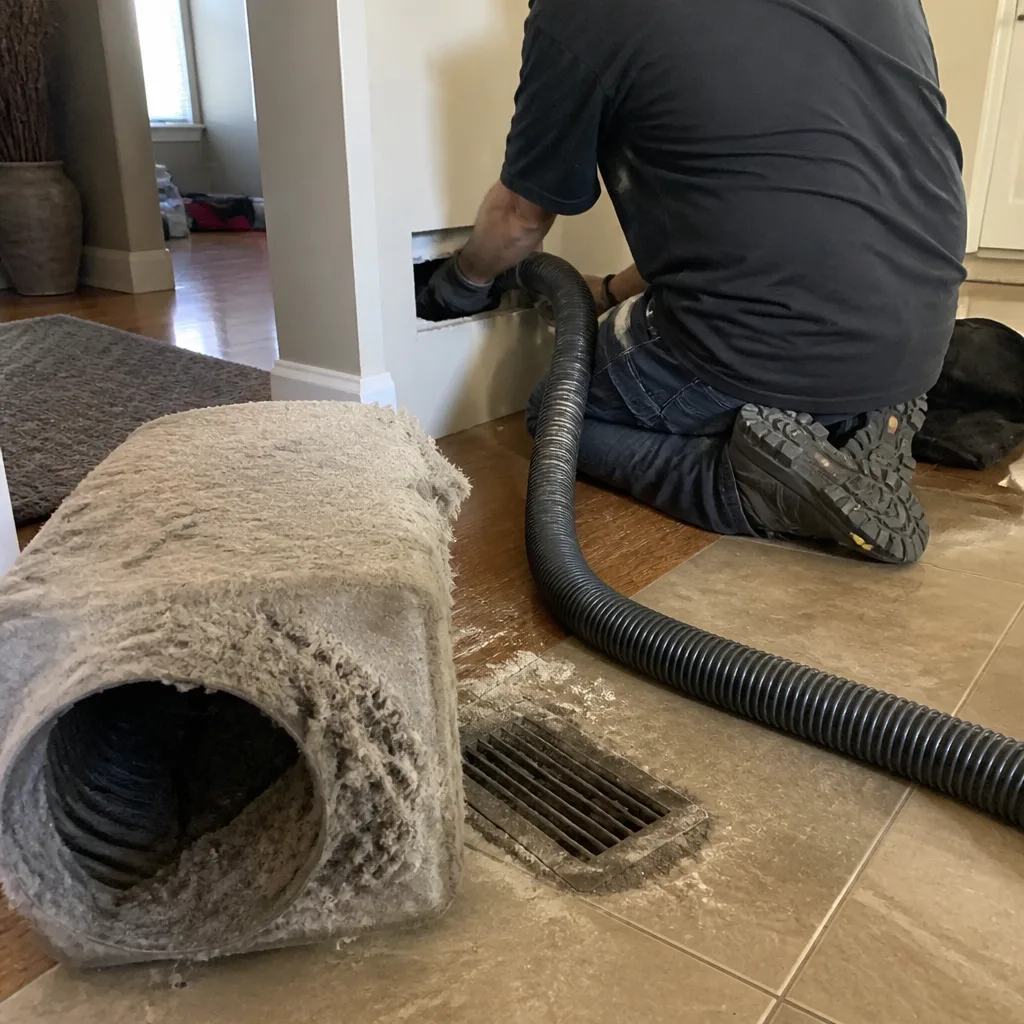 Before
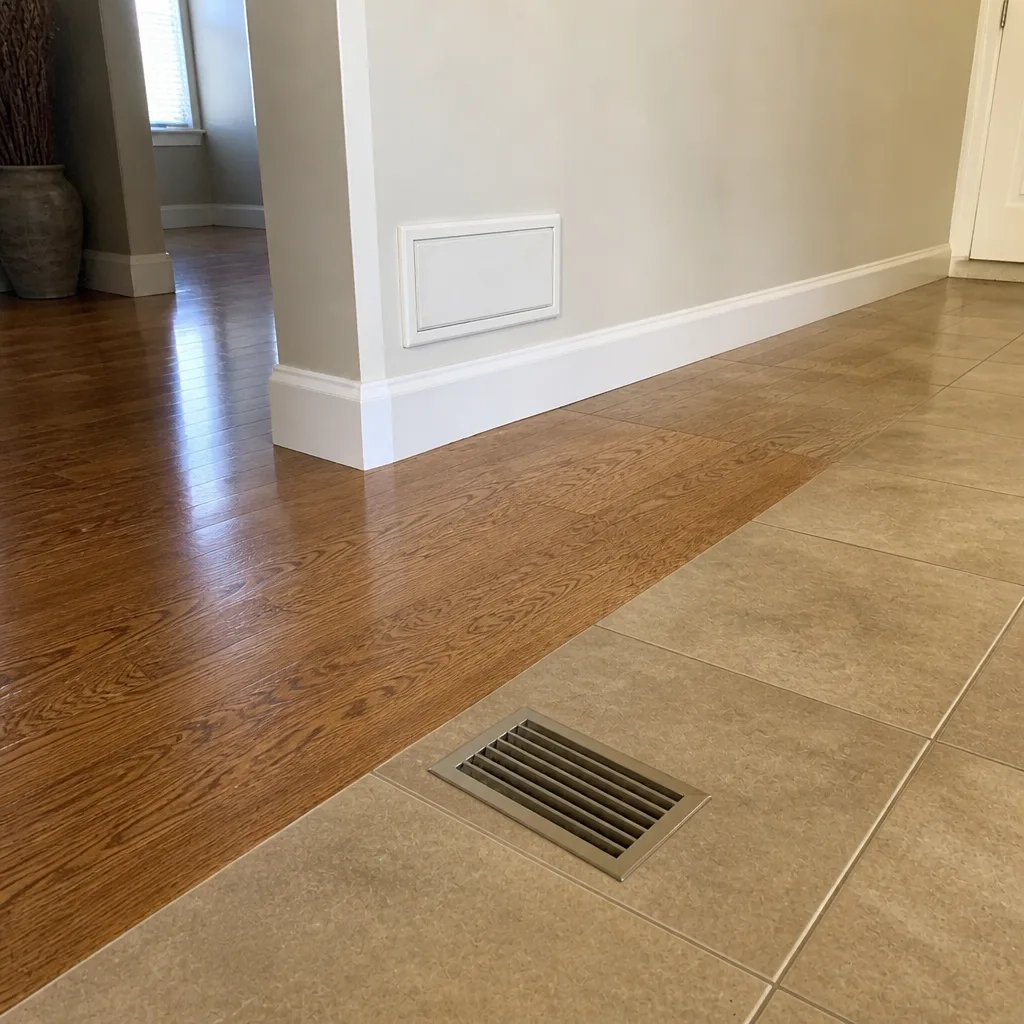 After
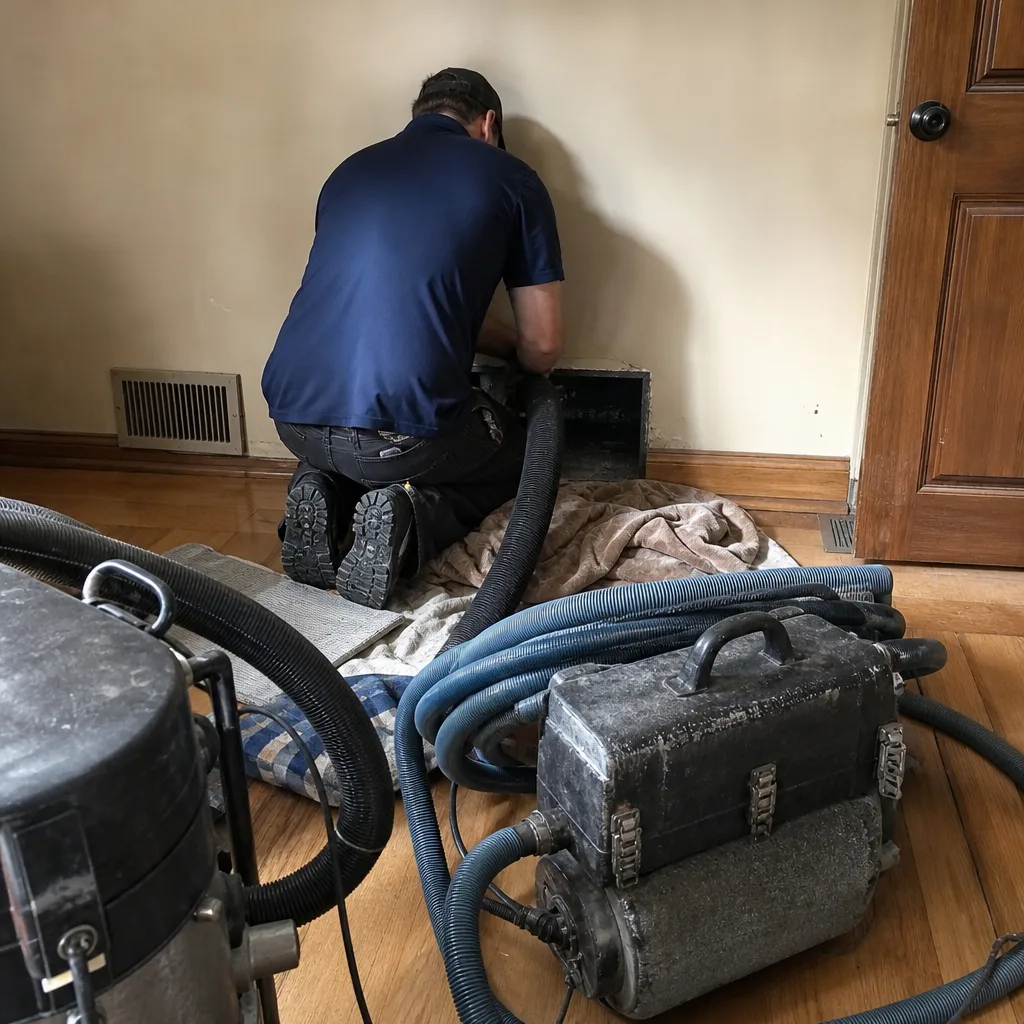 Before
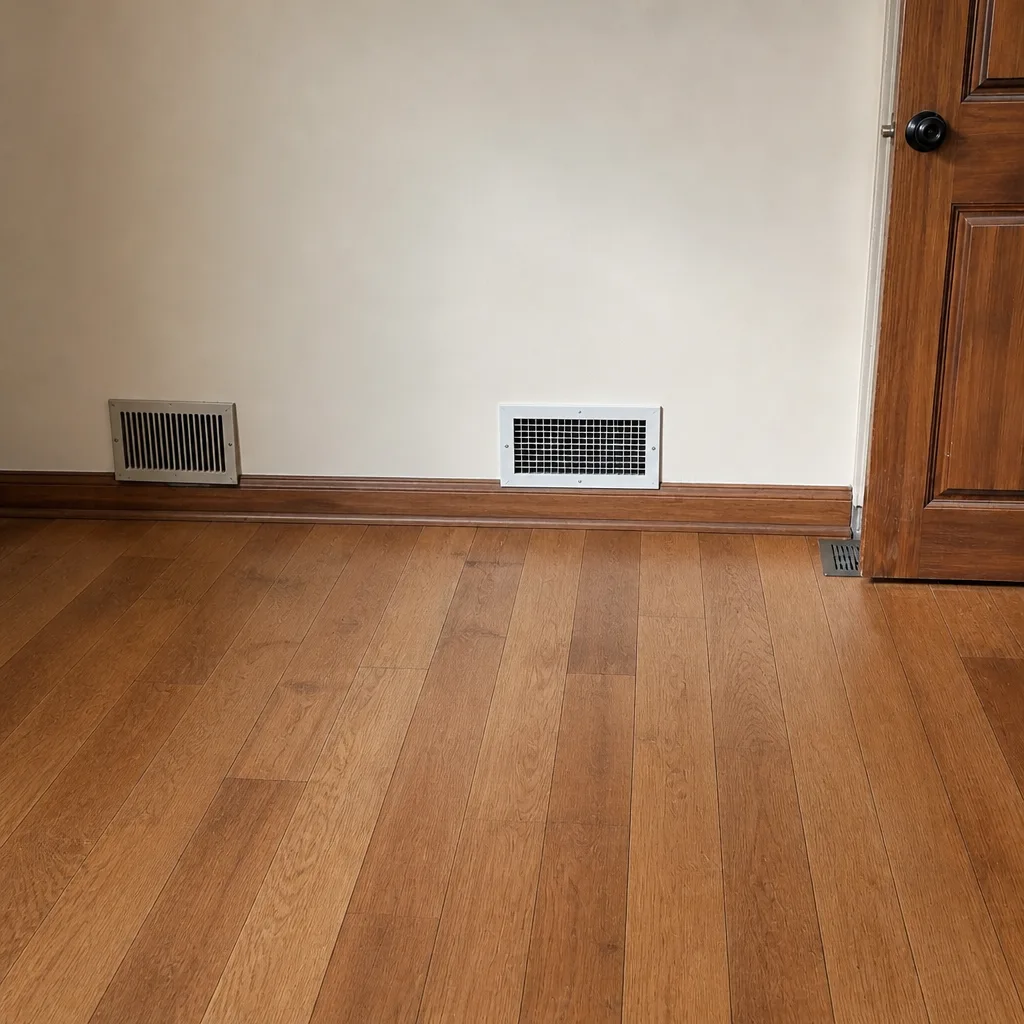 After
When to Call a Professional
Call when a musty smell persists through the whole heating season rather than fading after startup. Call when you see dark spotting on duct lining, droppings or nesting material, or rust staining from water intrusion. Call when a room that used to heat properly stops keeping up, or when run cycles and bills climb without explanation. Call when you’re comparing quotes and want to know which equipment a contractor actually uses. And call when you simply want to know what’s in your system before deciding anything, because an inspection answers that question whether or not the ducts need cleaning. Air Duct Cleaning Washington Park offers free estimates in Washington Park. Call (866) 947-8103. We answer 24/7. Fast dispatch from 7am to 7pm, Sunday through Friday.
Frequently Asked Questions
A musty smell that appears at heat startup is the most common sign in Washington Park, but its reliability depends on duration. If it fades within a few minutes, it’s likely surface dust burning off and a routine cleaning is reasonable. If it persists through the season, it points to something more and warrants a professional assessment before cleaning. Call (866) 947-8103 for an exact quote. Estimates are free.
Cheap quotes usually reflect a different scope, not a better price: a shop vac, one pass, no containment, no sealing, no documentation, often priced per vent. The gap between that and a full-system job comes down to equipment and time. Ask which equipment a contractor uses, whether sealing and sanitizing are included, and whether you’ll get photos of your own system. Call (866) 947-8103 for an exact quote. Estimates are free.
Pricing is set per job by a written estimate, and it depends on system size, how many components the visit covers, and whether duct repair or sanitizing is needed. We don’t quote per-vent teaser prices, because the whole-system scope is the actual product. One flat price per system is agreed before any work starts, and the written estimate sets the final price. Call (866) 947-8103 for an exact quote. Estimates are free.
Before-and-after photos of your own ducts are the proof, and you should ask for them as a matter of course. Documentation paired with an inspection walkthrough means you see what we found and what changed. If a contractor finishes without showing you anything, that’s the answer to your question. Call (866) 947-8103 for an exact quote. Estimates are free.
Most homes don’t need it on a fixed calendar schedule. Routine cleaning is triggered by evidence: visible debris at registers, a startup smell that persists, recent remodeling, pets, or a move-in with unknown history. Homes dealing with moisture or heavy filtration issues need a different conversation. The honest answer is to look before deciding. Call (866) 947-8103 for an exact quote. Estimates are free.
You can vacuum a register cover, but that reaches only the room-facing end of the system. The contamination that drives airflow problems, energy loss, and persistent odors sits along the run, at the joints, and in the air handler. Removing a register cover for a look is safe and useful; going further into a system under pressure isn’t worth it. Call (866) 947-8103 for an exact quote. Estimates are free.
The Bottom Line
Warning signs aren’t a checklist to score yourself against; they’re a diagnostic language. Odor timing tells you whether contamination is surface debris or active growth. Debris color and distribution at registers point to the source and its location. HVAC performance patterns identify restriction versus leakage. And health patterns should be tested against ambient exposure before you spend a dollar on either. The one rule that covers all of it: assess before you clean, because mold, rodents, and water intrusion change the job from maintenance to remediation. If you’re in Washington Park and any of these signs match what you’re seeing, call (866) 947-8103 for a free estimate. We answer 24/7. Fast dispatch from 7am to 7pm, Sunday through Friday.
Written by the team at Air Duct Cleaning Washington Park.